Materials Selection
Closing the loop on materials’ life-cycles
a Field Journal Essay by Tom T. Young
the Sustainable SITES Series
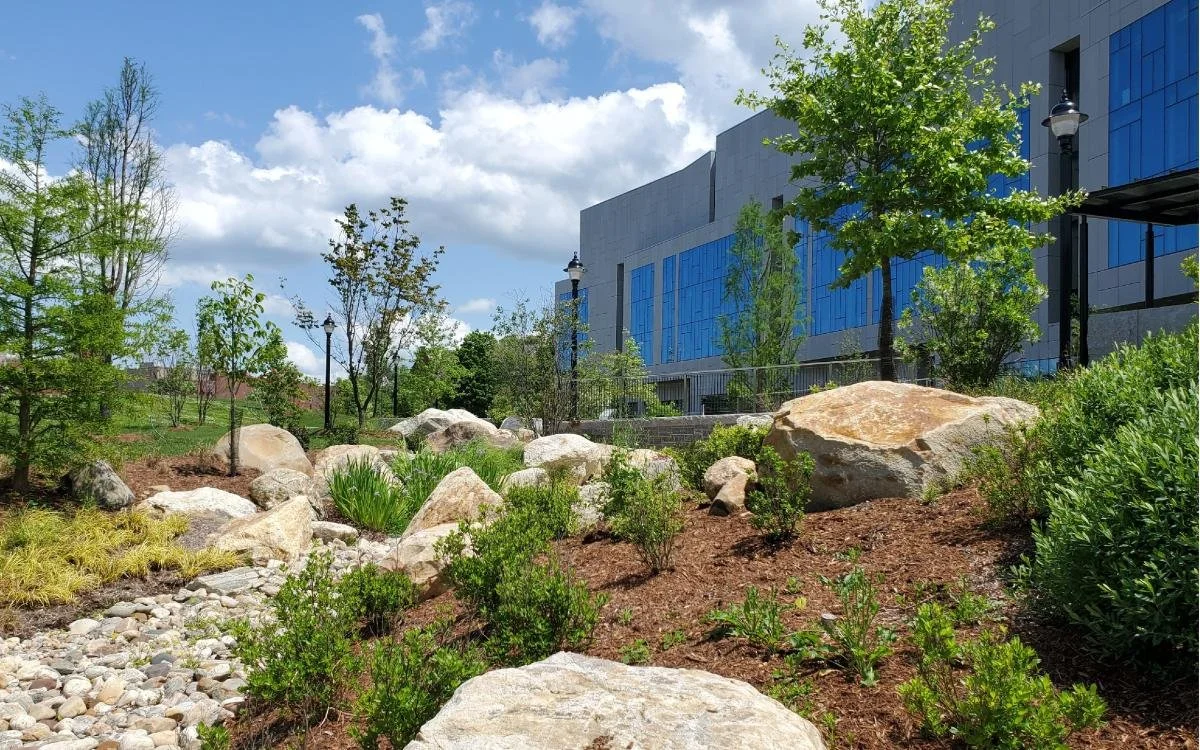
UConn STEM Research Center (SITES™ Accredited Landscape)
About SITES
This series unpacks elements of the Sustainable Sites Initiative (SITES™), which grew out of the same framework as USGBC’s LEED green building certification. This rating system evaluates the performance of a landscape site (anything from the building ‘skin’ outward) and accredits those that fulfill requirements and achieve a certain number of points.
“By aligning land design and development practices with functions of healthy ecosystems, the SITES™ program demonstrates how the work of developers, property owners, landscape architects… can protect, restore, and enhance ecosystem services.” (SITES™ v2 Reference Guide)
“Ecosystem services are goods and services of direct or indirect benefit to humans that are produced by ecosystem processes that involve the interactions of living elements, such as vegetation and soil organisms, and non-living elements such as bedrock, water, and air.” (SITES™)
Post-industrial Landscapes
Throughout history, the majority of public parks and private landscapes were constructed by demolishing most of the natural and built environment to make way for the new design. For a prime example of this, look no further than Olmsted’s Central Park ‘requiring’ the demolition of Seneca Village, a primarily African American neighborhood that was razed to complete the large-scale site plan.
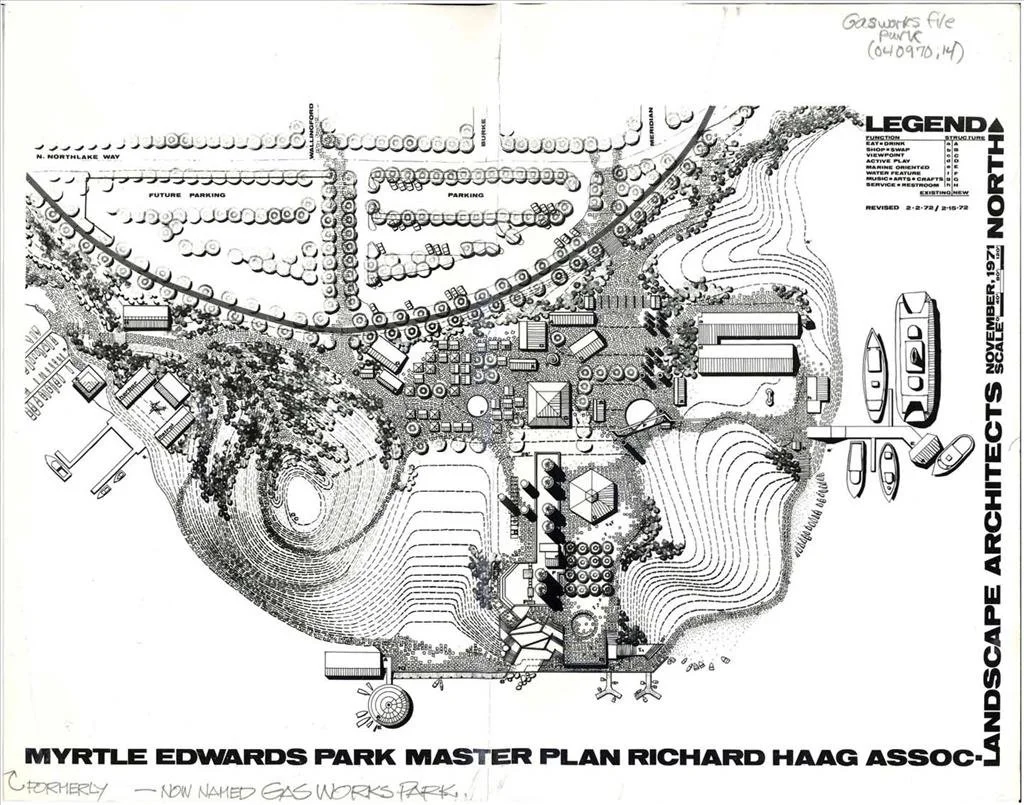
Gas Works Park Masterplan, Richard Haag
By the 1970s when the environmental movement was in full swing, landscape architects and artists were reimagining how to connect our experiences of outdoor spaces with the environmental harm caused by extraction, development, and industrialization. Instead of removing or burying what was once there: what if we kept it, integrated it into a novel landscape, and made the story (for better or worse) known to its visitors?
Richard Haag, American landscape architect, set out to answer these questions as he developed the masterplan for Gas Works Park that opened to the public in 1973. It featured something folks hadn’t seen in a park before: an old gas works plant, out of commission since the 1950s, now standing as a towering relic over its toxic grounds.
The metal structures, the concrete pavement, the earth were all kept on site throughout the design and construction process. Plants were strategically chosen to perform bioremediation of the toxins left behind, a first for a park this scale. These principles not only present beautiful and unique landscape opportunities, they prevent materials entering landfills and carbon entering the atmosphere. They remediate and heal the land while expressing the very reason why it became toxic in the first place.
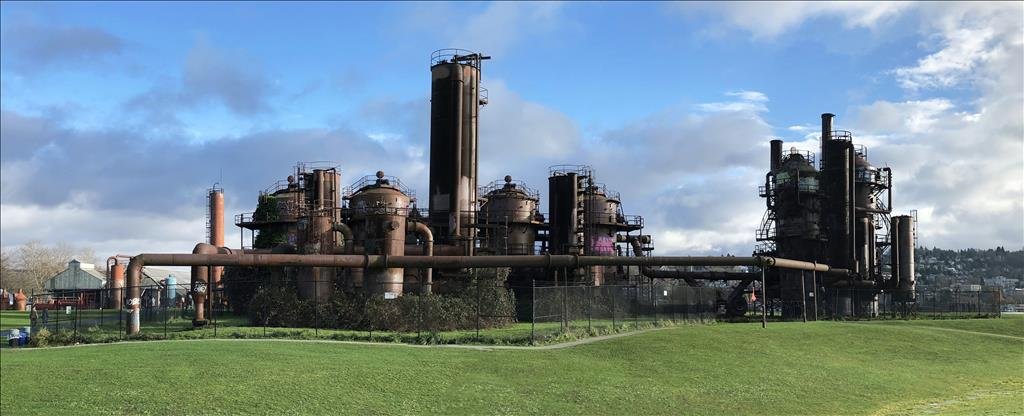
Gas Works Park (Seattle), Richard Haag
Today, there are a growing number of examples of post-industrial landscapes, including the High Line in New York. These design and construction practices are critical as we mitigate the effects of the climate crisis, and plant seeds for future generations to sustain this return to ecological equilibrium.
You don’t need to pursue SITES™ accreditation in order to make the best use of materials in your landscape design (although let us know if you’re interested!).
The following unpacks all of the prerequisites and credits for Sustainable Sites Initiative Section 5: Site Design – Materials Selection. Every SITES™ accredited landscape must appropriately select and use materials in ways that contribute to a project’s ability to support and enhance ecosystem services (at any point in the material’s life-cycle). Let’s explore the many ways in which demolition, selection, procurement, and use of materials can support decreased landfill use, preservation of natural resources, reduced emissions, and sustainable building products.
Materials Life-Cycle
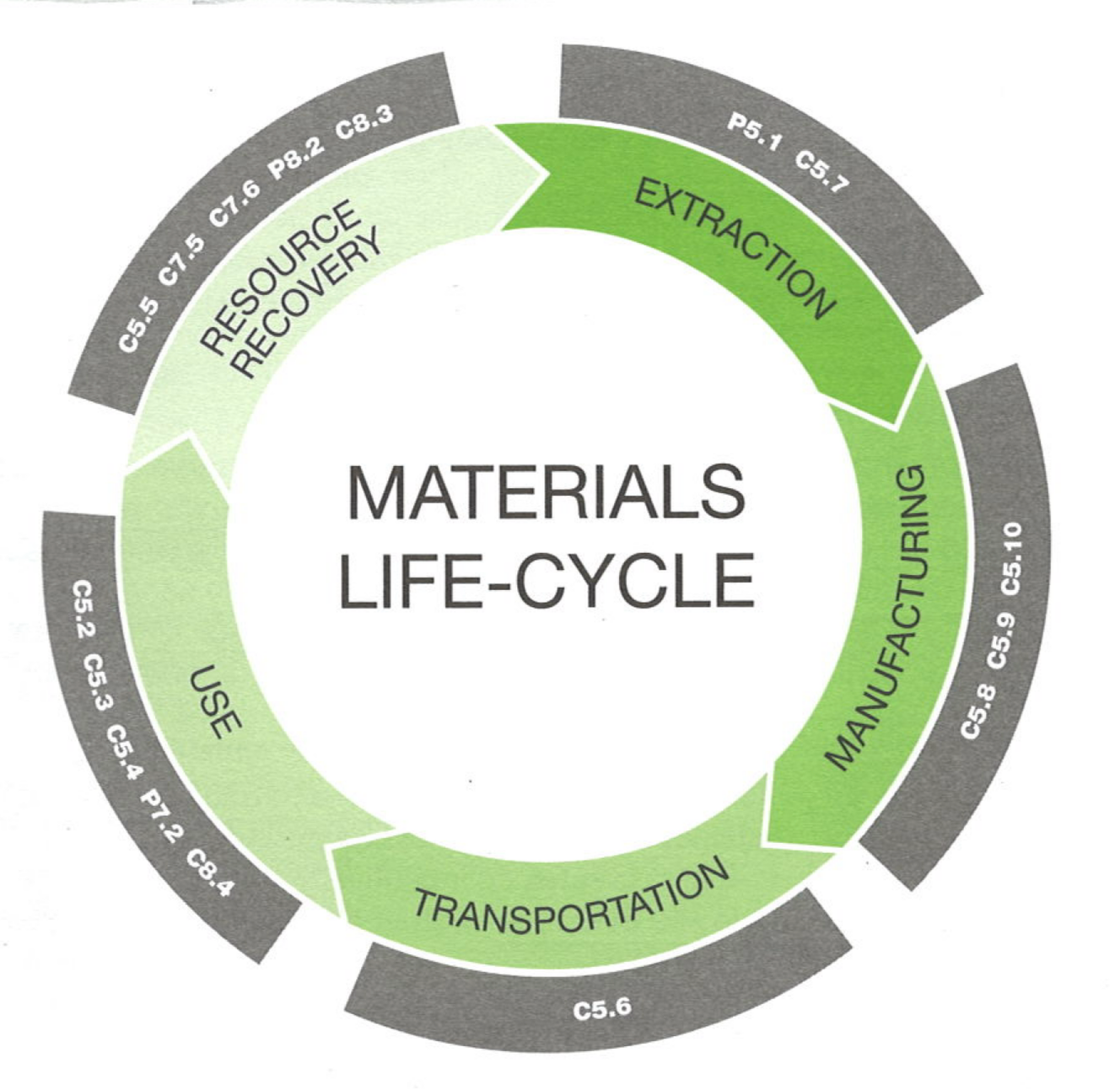
SITES™ Materials Life-Cycle
While studying at Rutgers, our landscape design teacher, Dean Cardasis, would teach us that a landscape embodies both space and stuff. The space that the stuff defines can be used for a number of activities and events—hosting BBQs, playing fetch, meditating, growing food. The stuff that defines the space, it turns out, can be a lot of things.
Wood, stone, vegetation, earth, metal, brick, concrete, asphalt, glass, textiles, plastic… We position these elements and install them within a site to create spaces, surfaces, seating, shade, screening, walls, water, containers, railings, visual interest, lighting, and art. And each of these has nearly endless options for color, material, finish, size, hardware, assembly, and source.
No matter the material, each has its own life-cycle:
Extraction (i.e., chopping down a tree, quarrying stone)
Manufacturing (i.e., assembling a bench, cutting dimensional steppers)
Transportation (i.e., local market, shipping container)
Use (i.e., replaceable parts, breaks in five years)
Resource Recovery (i.e., recycled/recyclable/repurposed materials)
The idea is to close the loop on as many material life-cycles as possible, minimizing extraction of virgin resources and adding to landfills. As many options there are for materials, there are just as many sustainable alternatives and techniques available. Landscape architect Meg Calkins was one of the founding members of the Sustainable Sites initiative, and wrote the textbook Materials for Sustainable Sites. This tremendous resource outlines the technical details that go into making choices for landscape construction.
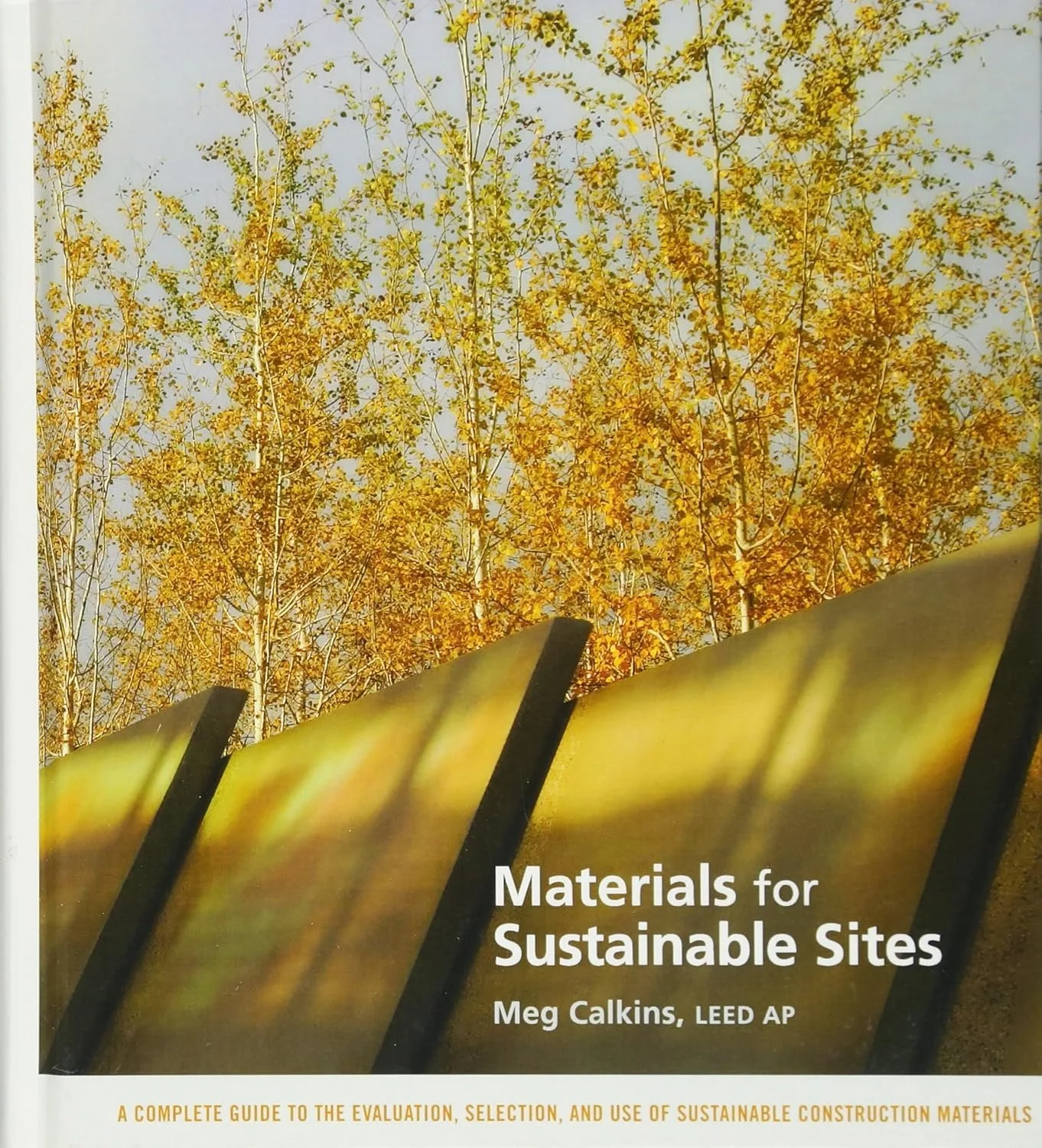
“Materials of site construction have evolved in response to many twentieth-century tends…The result has been a consumptive and sometimes wasteful materials industry with use of a limited palette of nationally standardized site construction materials (e.g., concrete, asphalt, pressure-treated lumber, power-coated steel).
Local, low embodied energy structures, such as earthen construction in the Southwest or dry stone construction in New England, have decreased in use as labor costs are high, workers skilled in these techniques are increasingly scarce, and national building codes hamper their use.”
– Meg Calkins, LEED/SITES AP
(Materials for Sustainable Sites, 2008)
Closing the Loop
Below, we unpack each phase of the materials life-cycle and explore how SITES™ requires and accredits projects that make sustainable decisions when selecting materials.
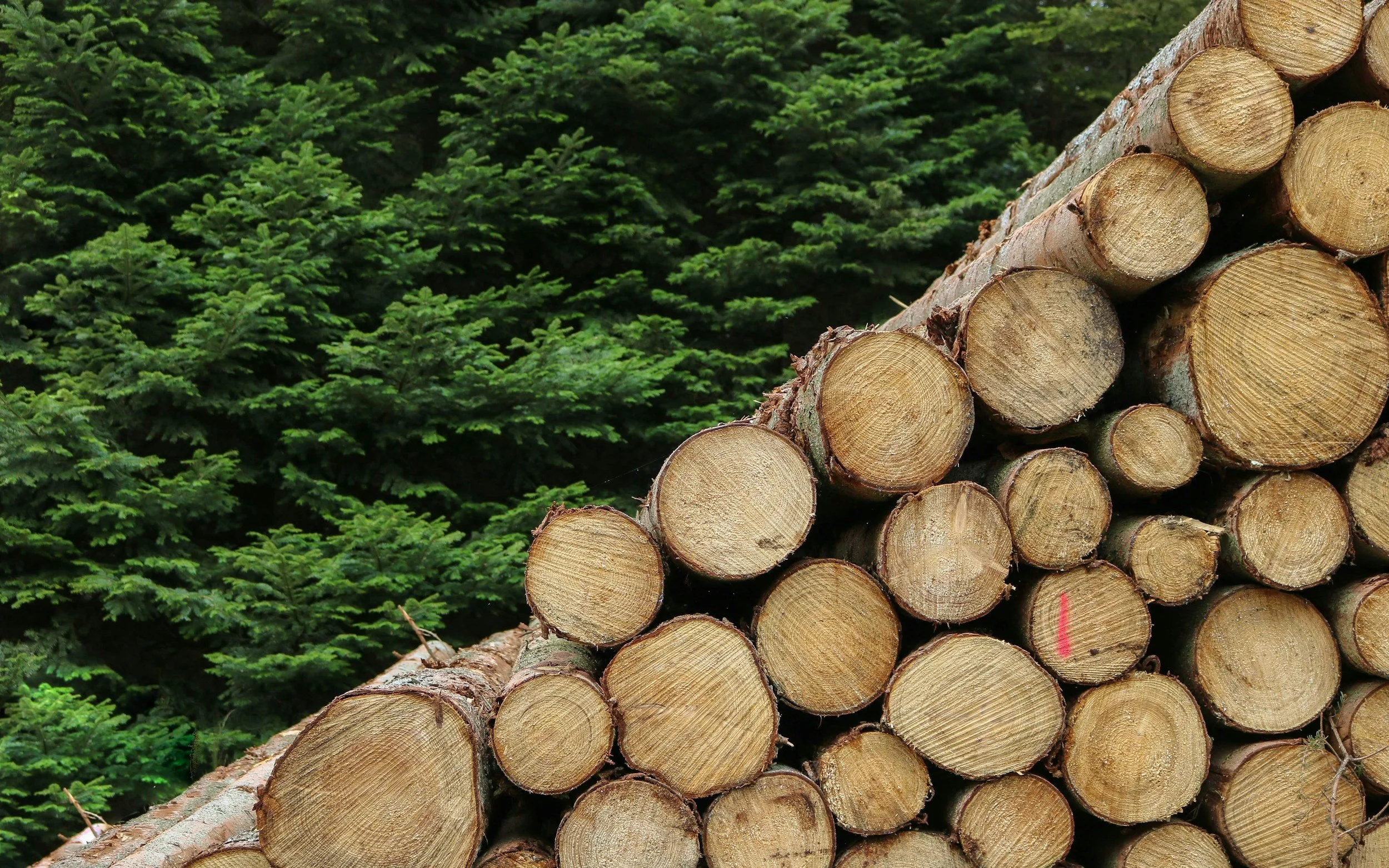
Extraction: Keep it Responsible
P5.1 Eliminate the use of wood from threatened tree species
C5.7 Support responsible extraction of raw materials
Generally, design teams are encouraged to repurpose and salvage as many materials as possible, rather than defaulting to extraction. If a project requires new materials, they should at least be responsibly sourced. Each SITES™ project cannot use wood from threatened tree species in any part of the design (mulch, furniture, decks, railings, and wood used in construction) in order to minimize the adverse effects on ecosystems.
You can achieve credits for supporting the responsible extraction of raw materials, which includes activities such as sending letters advocating for sustainable practices, or selecting manufacturers who disclose data on environmental practices. Criteria for what is considered “responsible” extraction ranges across mined or quarried materials, bio-based materials, and new wood products.
>> Convention on International Trade in Endangered Species (CITES)
>> IUCN “Red List of Threatened Species”
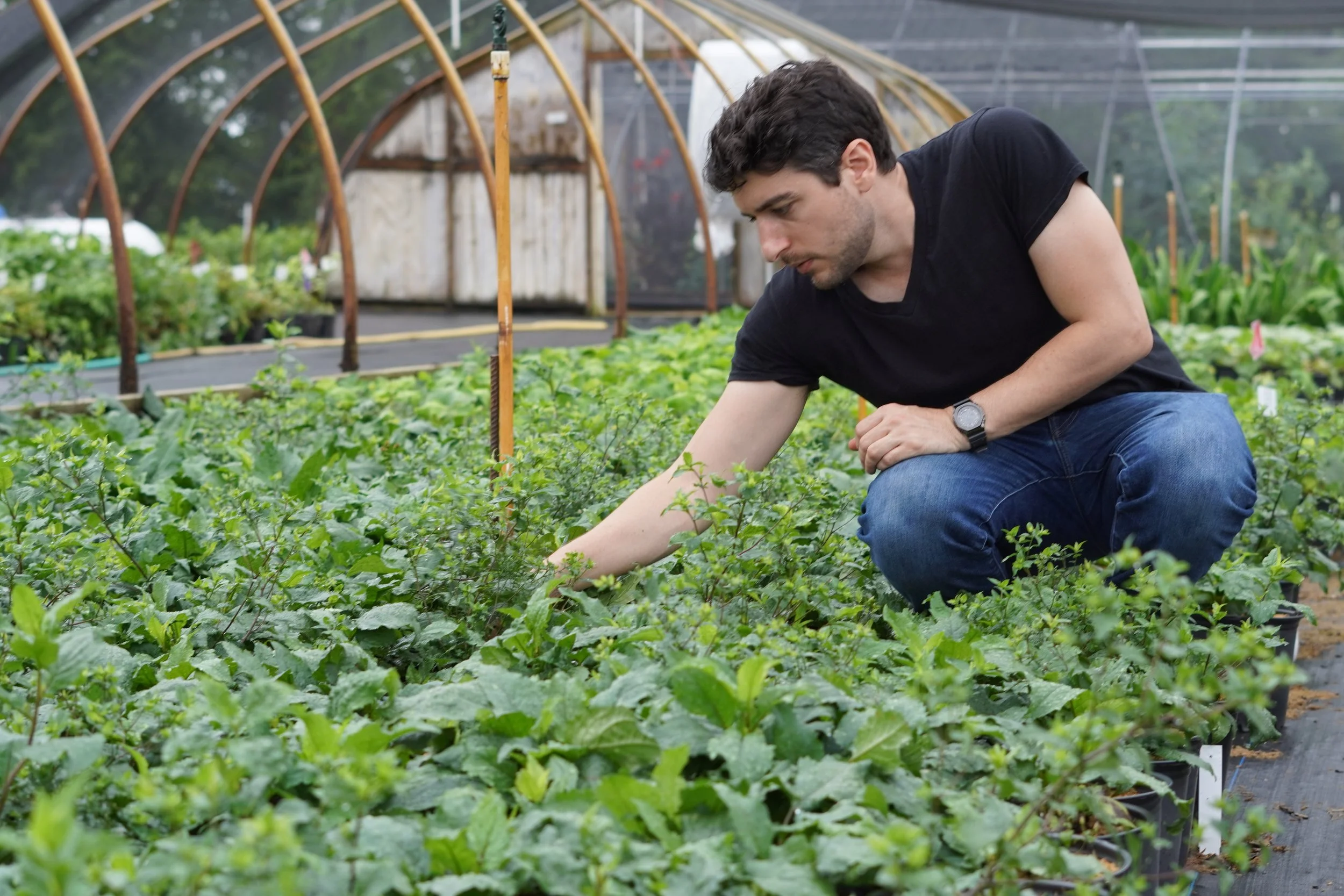
Manufacturing: Keep it Safe & Sustainable
C5.8 Support transparency and safer chemistry
C5.9 Support sustainability in materials manufacturing
C5.10 Support sustainability in plant production
Bringing raw materials together into a composite structure can embody a wide range of chemical, physical, and biological processes. When it comes to chemical safety, SITES™ rewards projects that source materials from manufacturers that disclose material chemistry and potential hazards, or who have completed a chemical hazard assessment for landscape elements like decks, railings, fences, pipes, lighting, fabrics, and more.
You can also achieve credits for supporting materials manufacturers or plant growers who are committed to reducing energy consumption/using renewable energy, reducing emissions, offsetting greenhouse gasses, reducing potable water use, or implementing sustainable growing techniques like integrated pest management.
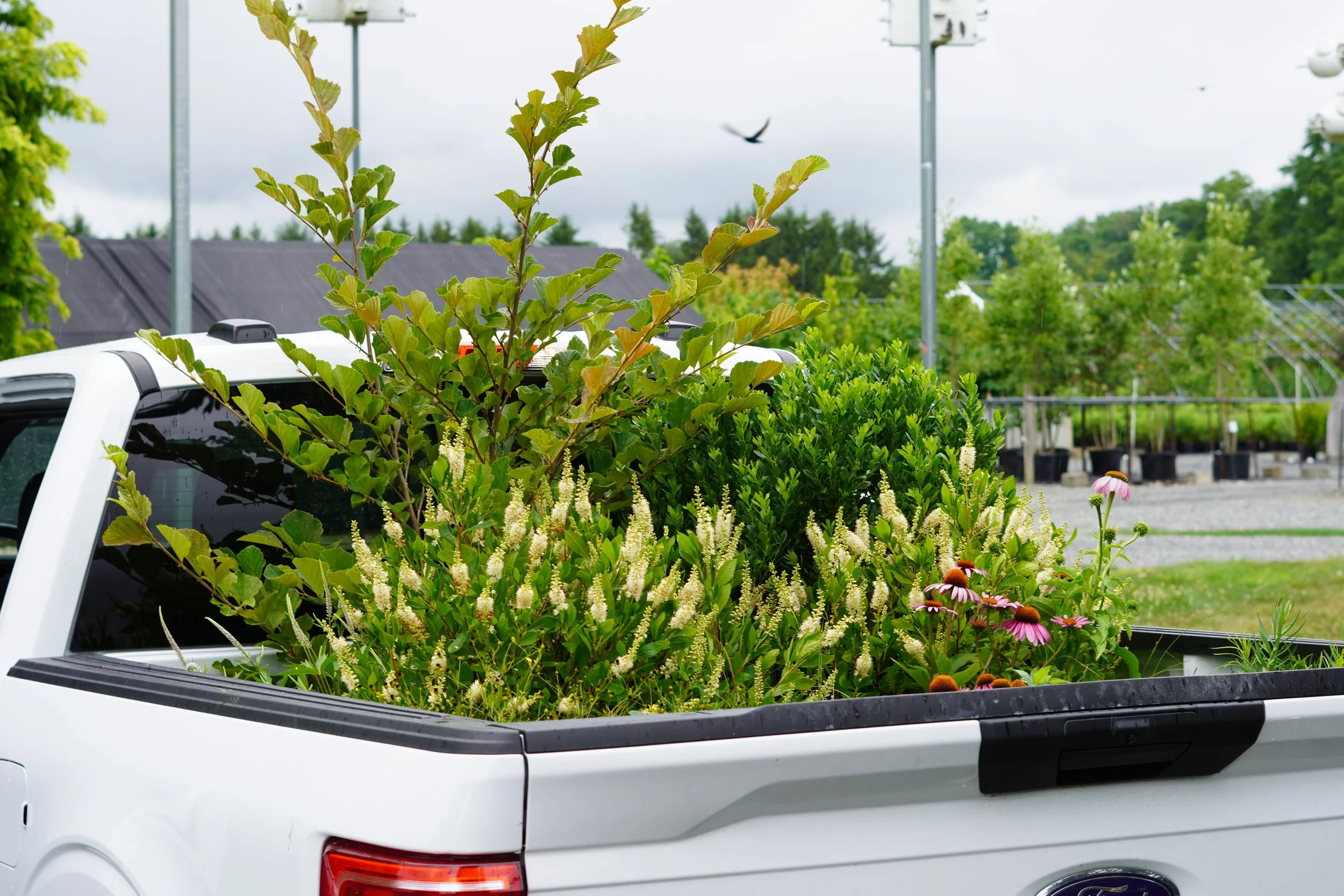
Transportation: Keep it Regional
C5.6 Use regional materials
In order to reduce energy used in transportation, increase demand for local supplies, and promote regional identity, landscape designs are encouraged to incorporate regional materials into their construction process. The more the materials, plants, and soil are sourced regionally (by weight), the higher the point value assigned.
What’s considered regional? Soil, compost, mulch, boulders, rock, and aggregate all should be extracted, harvested/recovered, and/or manufactured within 50 miles of the site. Plants should be grown within 250 miles of the site, and other materials should be sourced within 500 miles.
Use: Keep it On Site
C5.2 Maintain on-site structures and paving
C5.3 Design for adaptability and disassembly
C5.4 Reuse salvaged materials and plants
There are many ways to incorporate materials into a site’s design without the need for extraction or condemning a structure to the landfill eventually. Firstly, it’s best to try and save any existing structures or paving on site (occupied buildings don’t count). Taking a cue from post-industrialism, this can create beautiful opportunities, aid in decision-making, and reduce overall project budget.
Next, any new structures should be designed for adaptability and disassembly. In other words, anything built or installed on site may eventually be dismantled and repurposed without having to be fully demolished and trashed. Design details that facilitate disassembly include using screws vs. nails, mortar-less retaining walls, dry-laid patios and paths, avoiding coatings, eliminating composites, and using durable materials.
Finally, using salvaged materials and plants can redirect objects from the landfill, reduce overall project cost, and often result in a beautiful and bespoke aesthetic with a story attached.
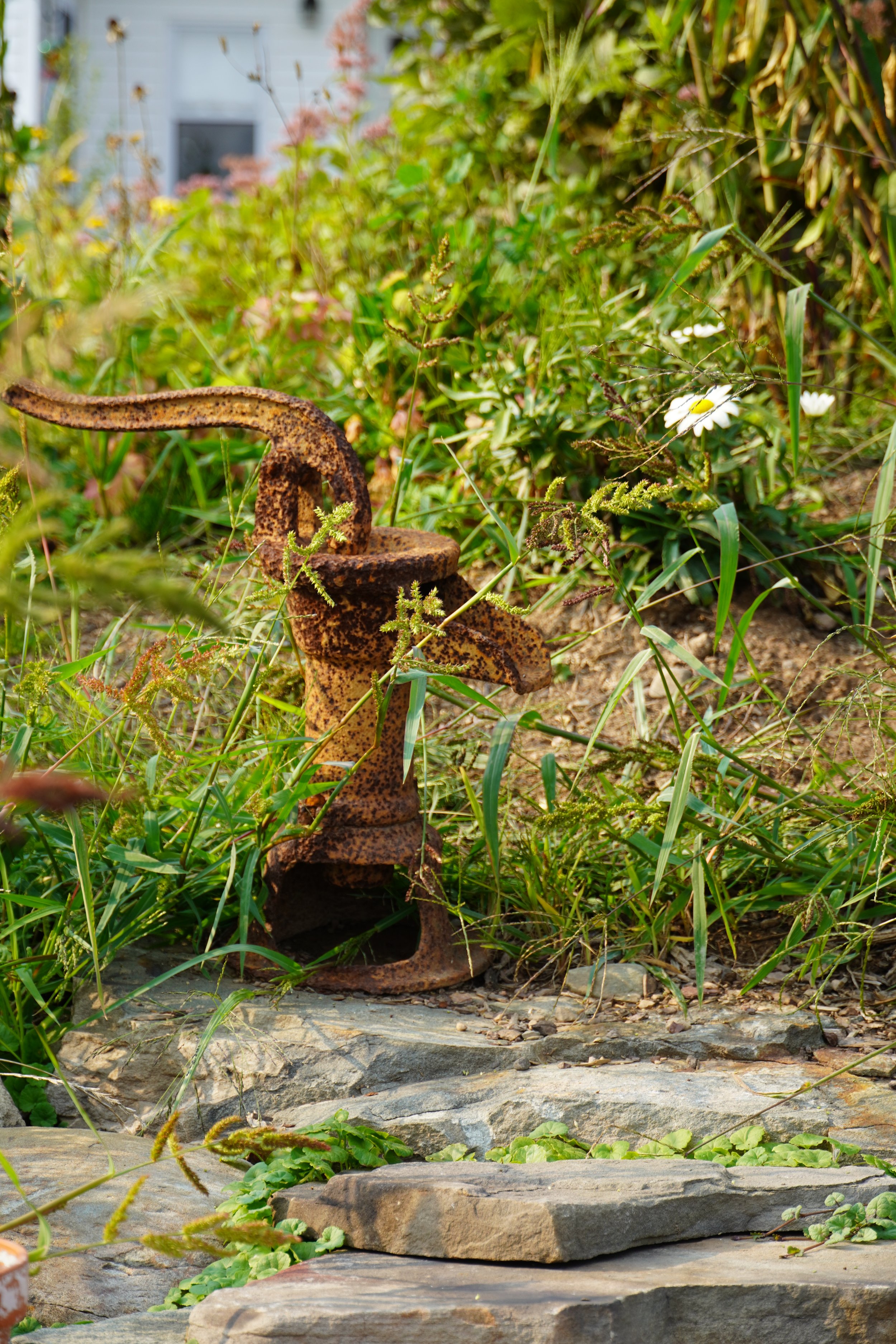
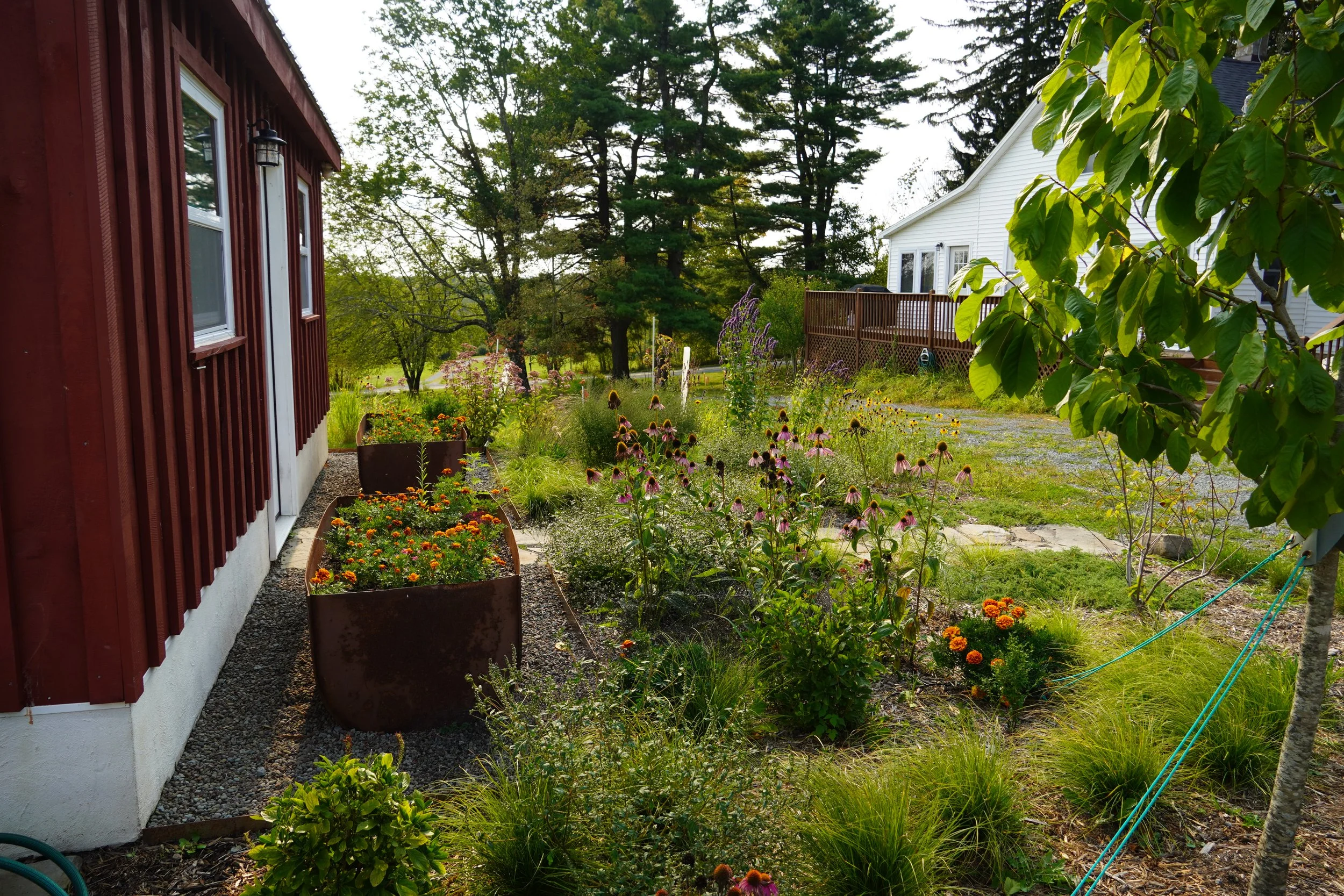
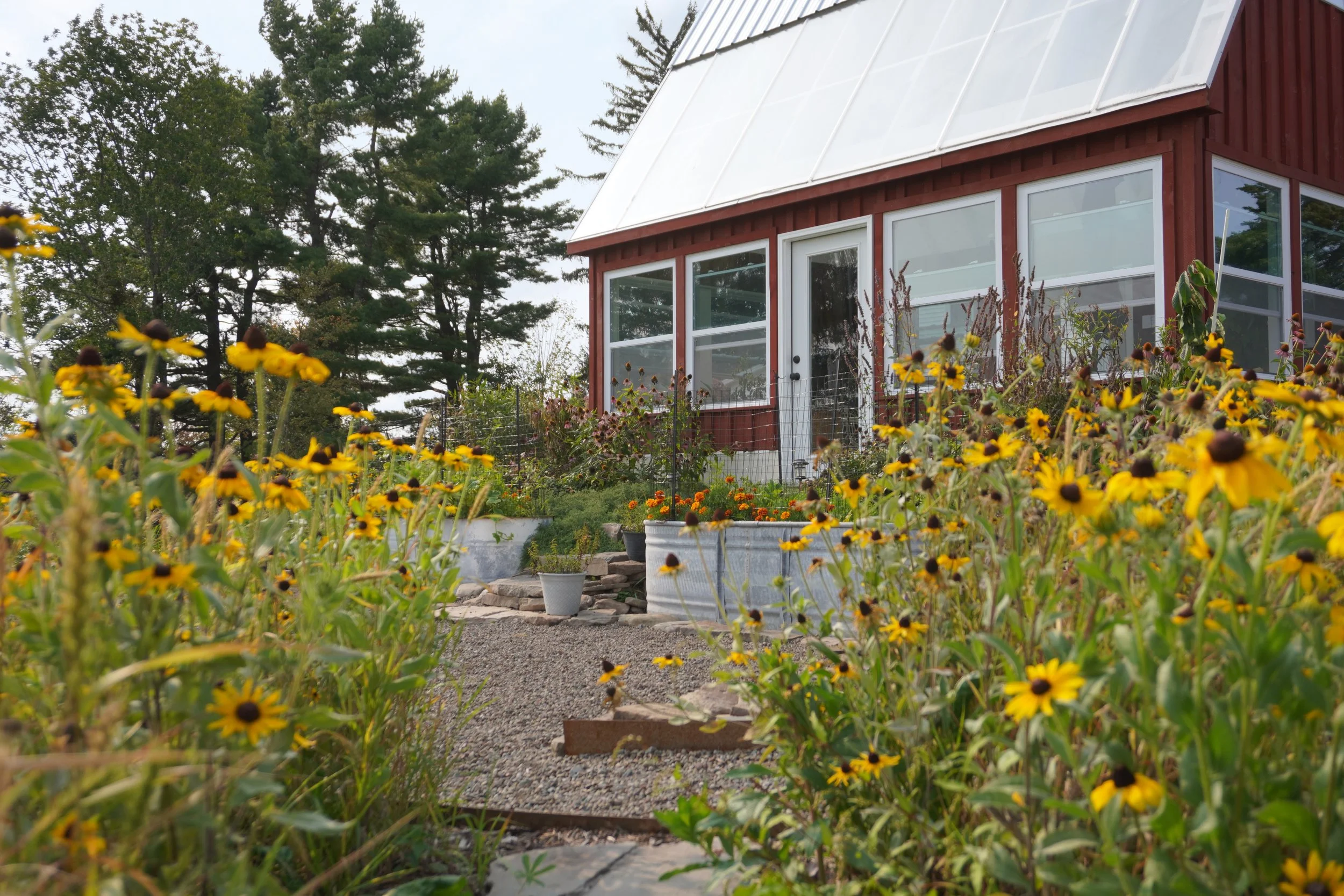
This project of ours in Pennsylvania (below) centers around a newly built greenhouse that is taking the place of a barn that had to come down. We repurposed the foundation stones into a wall and pavers, the old cow troughs and oil barrels into planters, locally grown and gifted plants, and even a water pump was fashioned into a sculpture.


Resource Recovery: Keep it Recycled
C5.5 Use recycled content materials
In order to reduce the consumption of virgin materials, select products that contain recycled content. This can include on-site recycling of concrete and asphalt, and designing with various aggregate materials that don’t need to be purchased or brought in. Purchased or salvaged recycled content can either be post-consumer (generated by households or commercial facilities) or pre-consumer material (diverted from the waste stream during the manufacturing process).
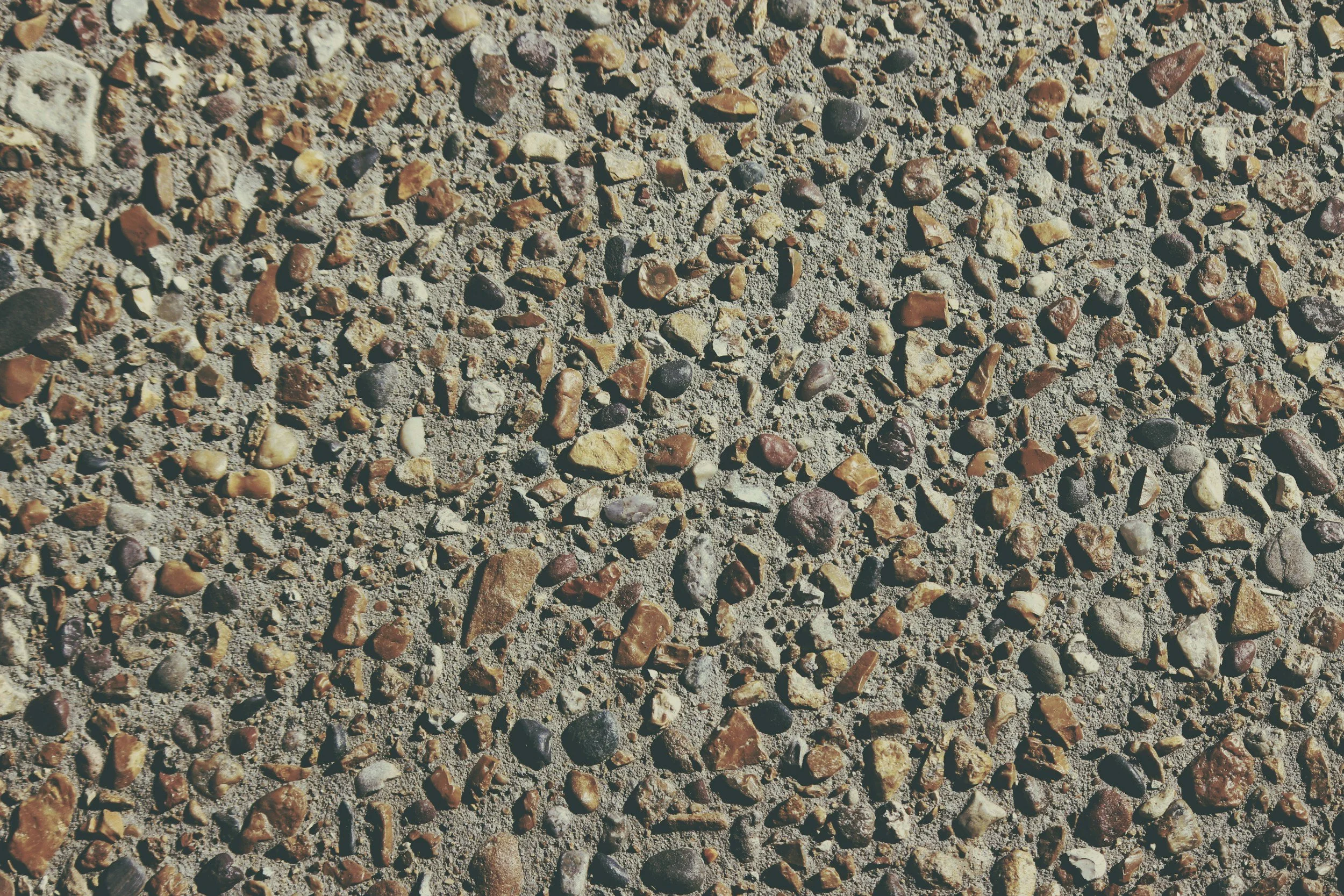
Exposed aggregate in concrete can be made with recycled materials
Getting Started
The land provides us with bountiful, but certainly limited resources.
Materials can be harnessed and processed into endless objects that create space, beauty, and function.
Understand the life-cycles of materials that you select for your landscape.
Design to close the loop, and express the materials’ story out loud.
If you’re stuck along the way, reach out and we’ll jump right in.
Opportunity is in every landscape.
From the ground up,
Design Ecosystems with us.
Check out other related essays from our Sustainable SITES Series
