Designing with the nature of plants and their neighbors
a Field Journal Essay by Tom T. Young
the Sustainable SITES Series
About SITES
This series unpacks elements of the Sustainable Sites Initiative (SITES™), which grew out of the same framework as USGBC’s LEED green building certification. This rating system evaluates the performance of a landscape site (anything from the building ‘skin’ outward) and accredits those that fulfill requirements and achieve a certain number of points.
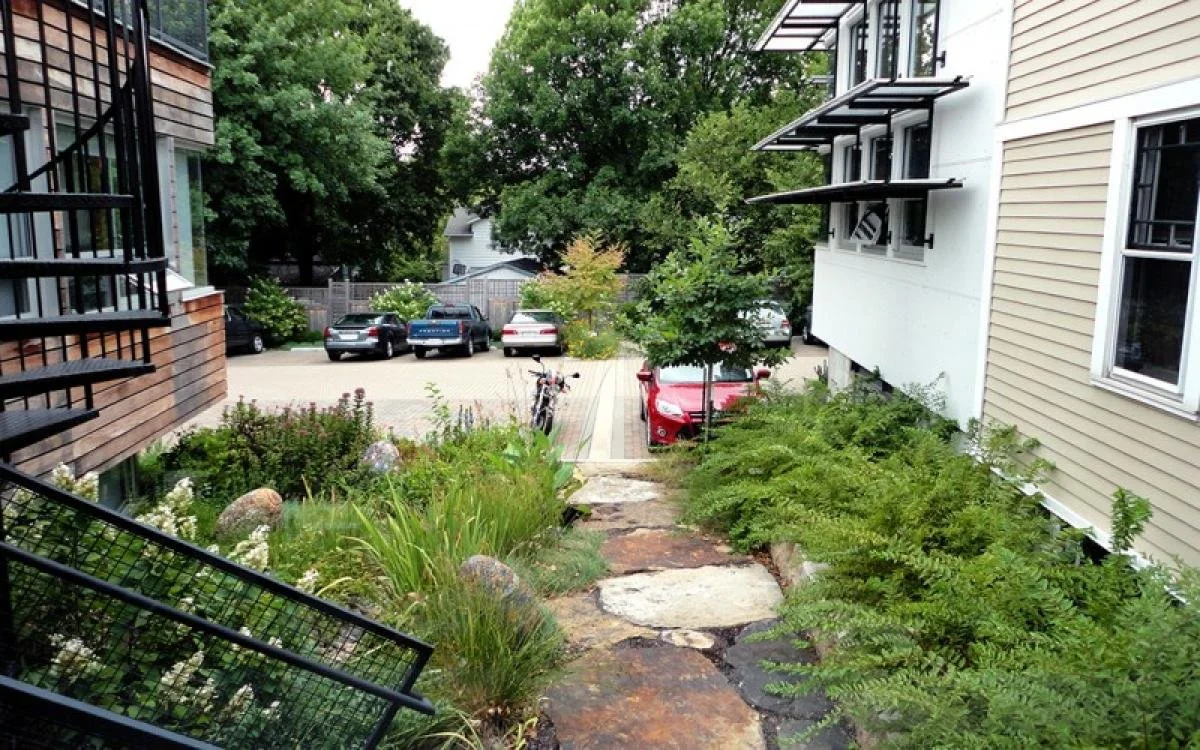
Pictured: SWT Design Campus (SITES™ Accredited)
“By aligning land design and development practices with functions of healthy ecosystems, the SITES™ program demonstrates how the work of developers, property owners, landscape architects… can protect, restore, and enhance ecosystem services.” (SITES™ v2 Reference Guide)
“Ecosystem services are goods and services of direct or indirect benefit to humans that are produced by ecosystem processes that involve the interactions of living elements, such as vegetation and soil organisms, and non-living elements such as bedrock, water, and air.” (SITES™)
The Vegetation Life-cycle
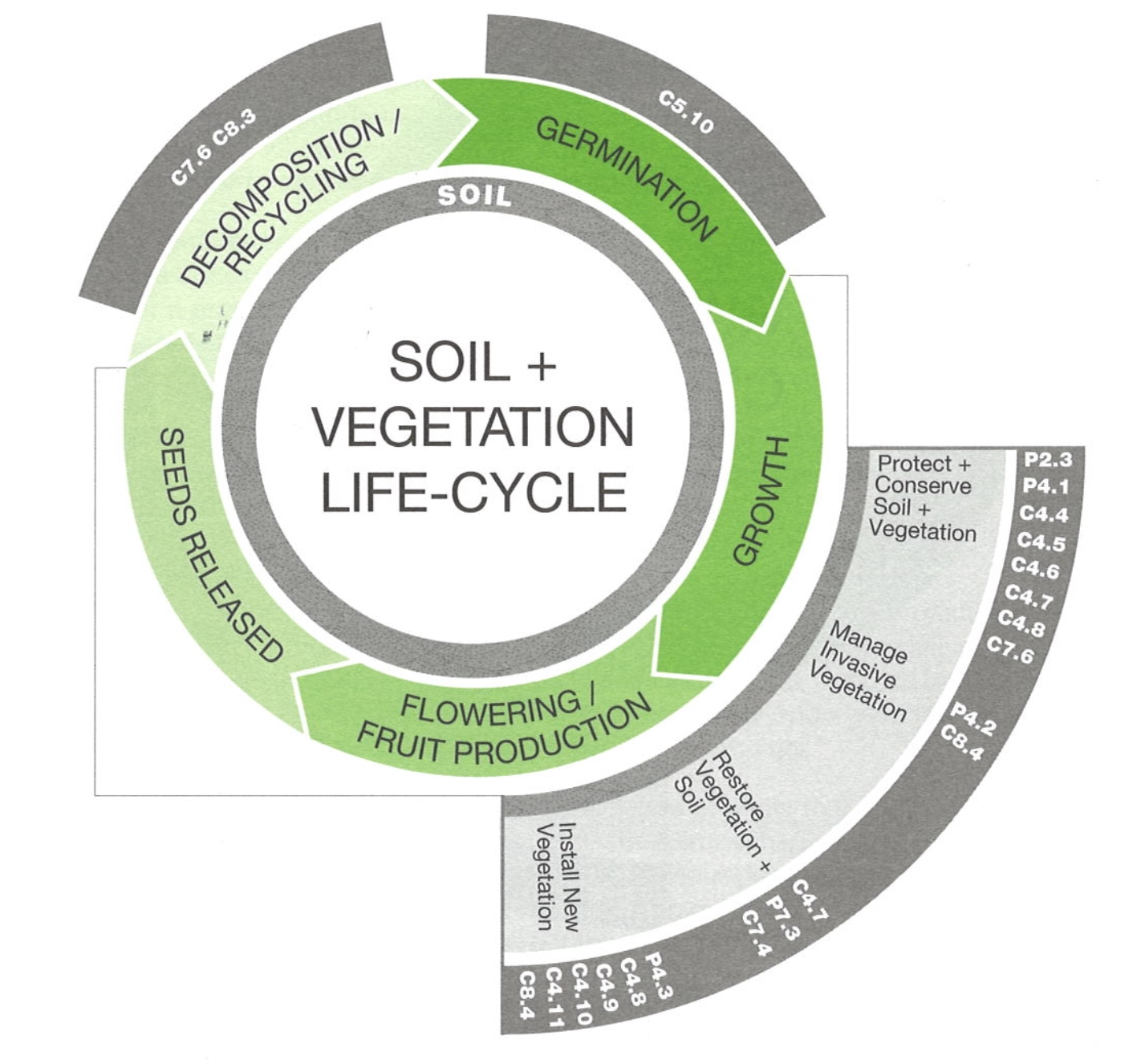
There are many ecosystem services that can be protected, restored, and enhanced, which we’ll explore in this and other essays. Today, we’ll focus on the vegetation life-cycle and the ways in which sustainable design can leverage the functionality of native and appropriate plants, which reduce irrigation and maintenance needs, increase habitat, and promote regional identity. By replacing lawn, hardscaping, and invasive populations with native plant communities, we create a landscape that’s as beautiful as it is functional.
Plants have been living and competing for resources in every corner of the globe for hundreds of millions of years. They have found their niches from dark caves to sunny deserts to coral reefs to layers in forest canopies. Over nine million species live across the planet, and have evolved alongside the patterns of the sun, water, wind, soil, topography, and neighboring biotic life.
When we talk about native plants, we mean those that have been here since before colonization, when settlers violently displaced indigenous people and brought with them disease, invasive species, and a penchant for deforestation. Since then, urbanization and industrial agriculture has turned our once biodiverse and biomassive landscapes into monocultures of cows, corn, and concrete. This directly results in decreased habitat for food-supporting pollinators, more frequent/worsening flooding and erosion events, increase in pests and disease, and poisoning of waters downstream.
You don’t need to pursue SITES™ accreditation in order to mitigate these issues in your next landscape design project (although let us know if you’re interested!).
The following unpacks Sustainable Sites Initiative prerequisite P4.3 Use appropriate plants and related credits, under Section 4: Site Design—Soil + Vegetation. Every SITES™ accredited landscape must use plants appropriate to a site’s conditions, climate, and design intent. Credits are given to projects that incorporate native plants, native plant communities, and optimize biomass.
Let’s unpack how to design with the nature of plants and the conditions of the land to make thriving, functional, and lush outdoor spaces.
Use Native and Appropriate Plants
In order to achieve SITES™ accreditation, a landscape intervention must (among a few other prerequisites) improve landscape performance and reduce resource use by installing only plants that are appropriate for site conditions, climate, and design intent. While non-native (or exotic) plants do qualify for this, a design may go above and beyond with credit C4.6 Conserve and use native plants.
When selecting “appropriate” plants, the following attributes should be considered: cold hardiness, heat and salt tolerance, soil moisture range, water use requirements, soil volume and pH requirements, sun and shade requirements, pest susceptibility, and maintenance requirements.
That’s quite the list! Ultimately the goal is to choose plants that work with, not against, the conditions of the site. So if you’re planting in a bed that gets 4–6 hours of sunlight a day and has soil that drains fairly quickly, the plant palette should include species that are found naturally in this type of environment (i.e., a forest’s edge). Many plant nurseries (like Pleasant Run Nursery or Plant Detectives) provide details about what conditions each plant will thrive in.
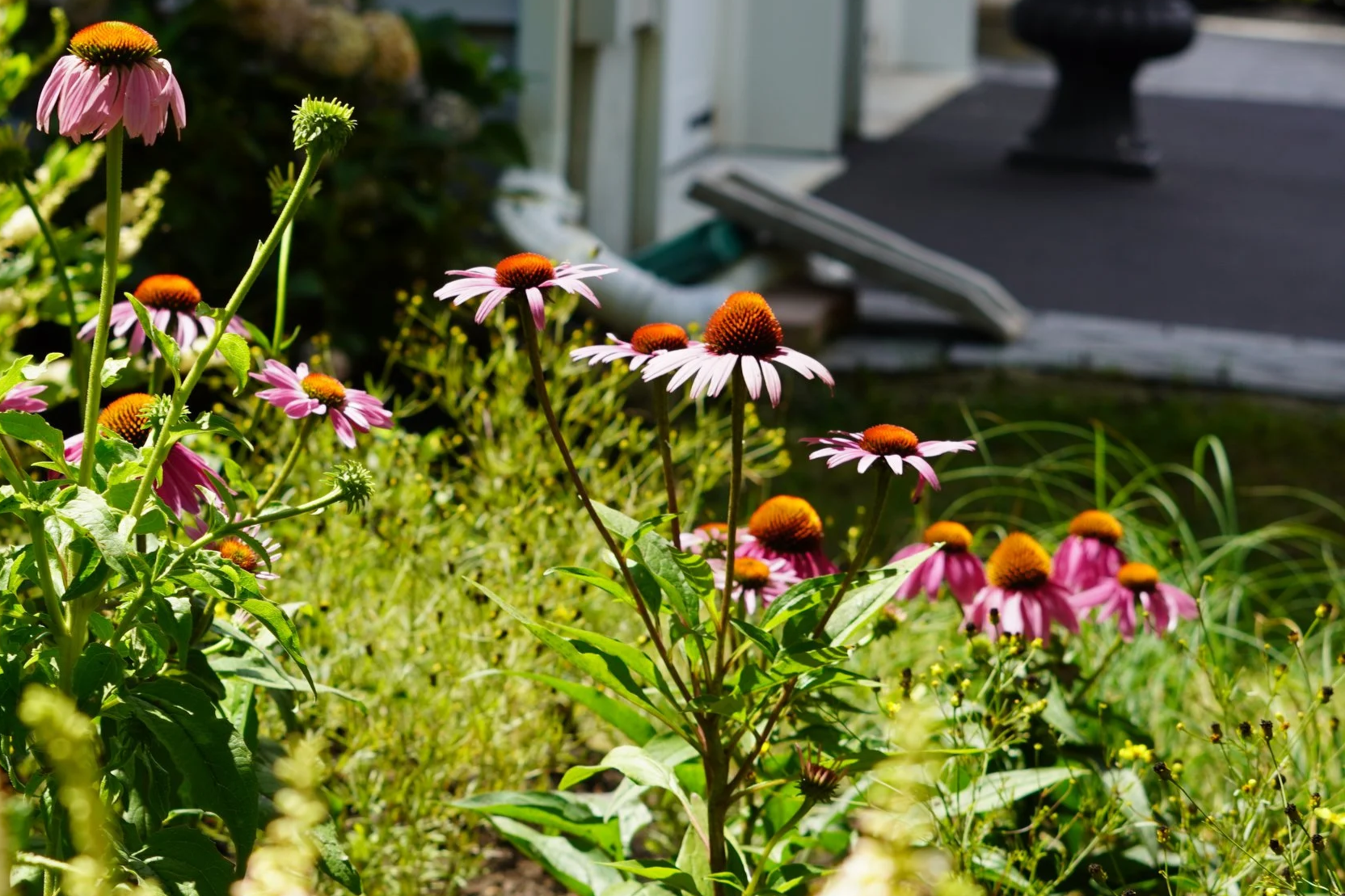
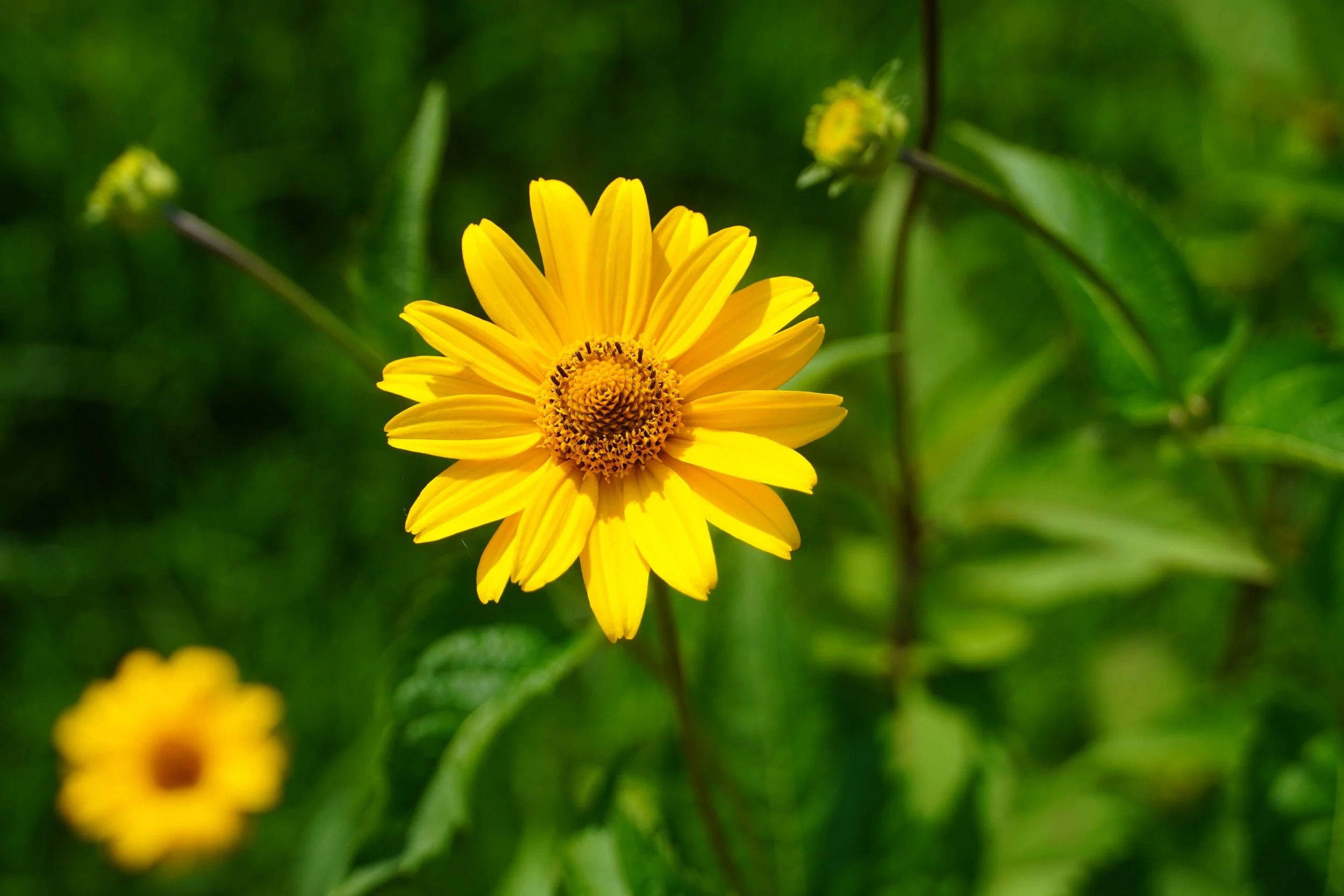
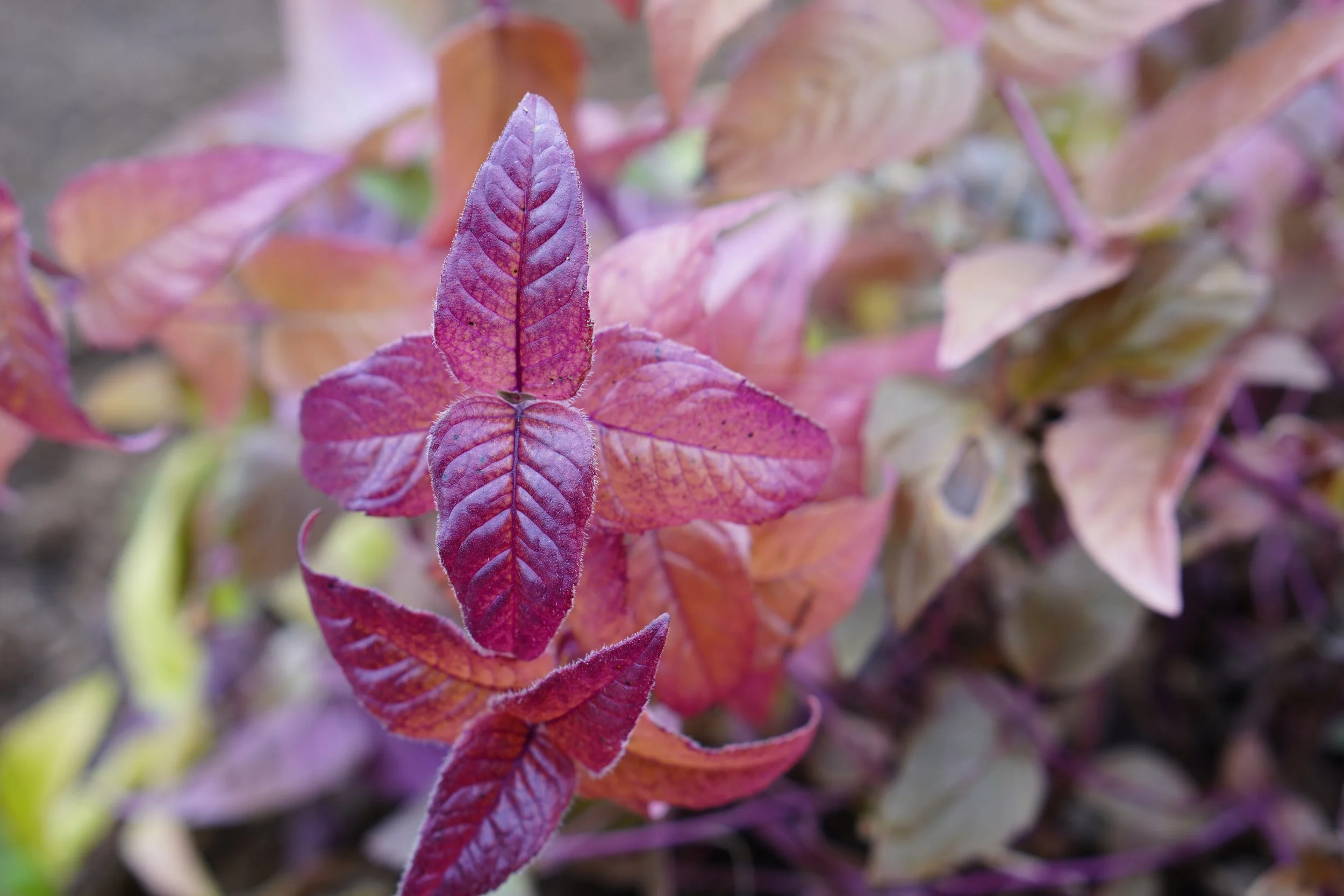
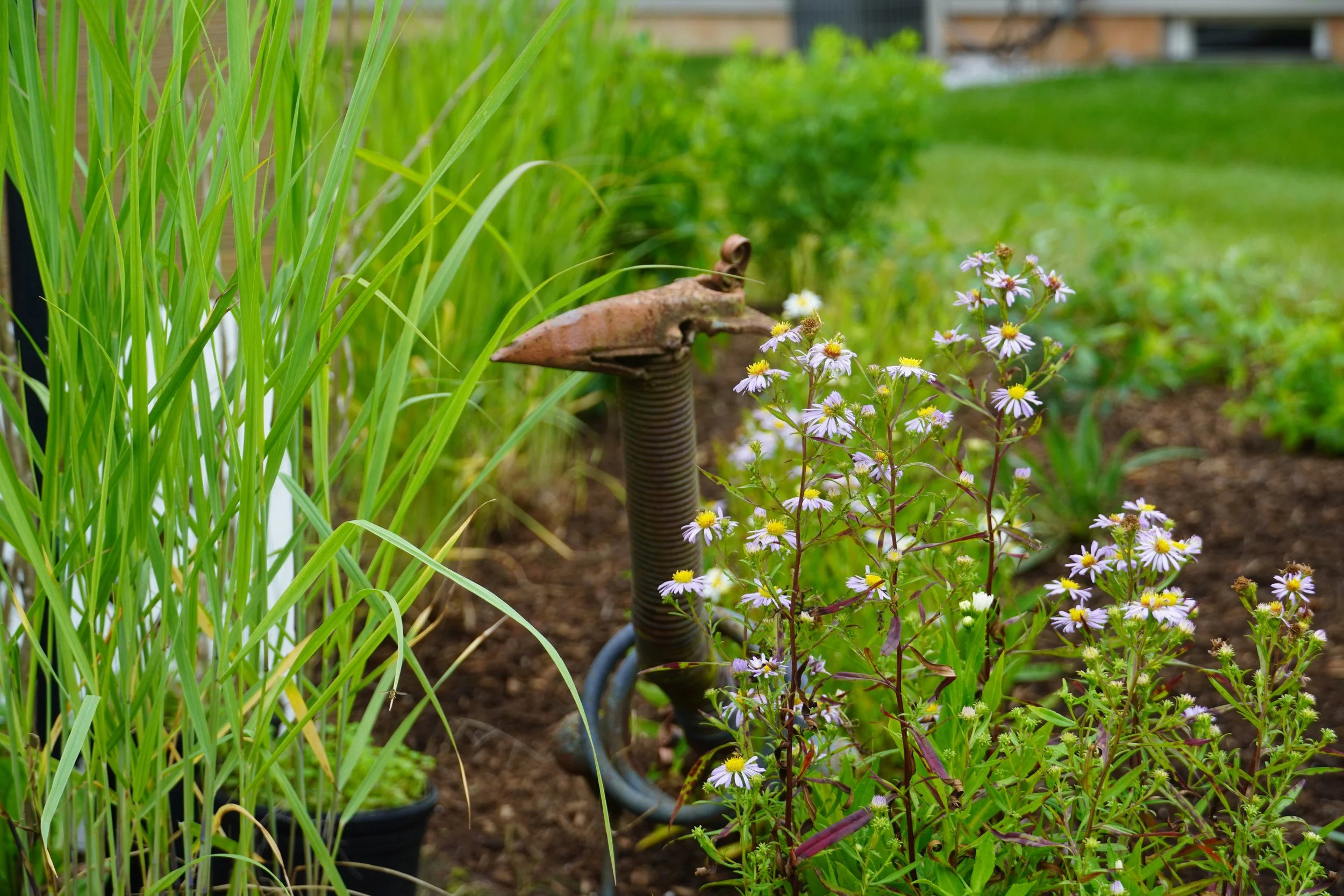
While non-native plants can still function well in these environments (i.e., Russian sage, Japanese maple), native species are both well-adapted to this environment (they’ve been here longer than humans!) and also support habitat for local insects and fauna. Any invasive species that outcompetes natives and takes over must be removed, managed, and strictly not planted (and now finally banned in New Jersey).
Projects pursuing SITES™ can easily satisfy a prerequisite and gain 3–6 points towards their minimum simply by using native plants in the design (20–60% of the total coverage respectively). More importantly, the design makes best use of the land to support wildlife, slow and filter water, and reduce the need for excessive resources and maintenance.
Plant Diversity
Another way to earn points towards accreditation is to pursue credit C4.7 Conserve and restore native plant communities. “A native plant community is an assemblage of plant species whose composition and structure are typical of native plant communities mapped at the EPA Level III ecoregion or are known to naturally occur within 200 miles of the site.” (SITES™ v2 Reference Guide)
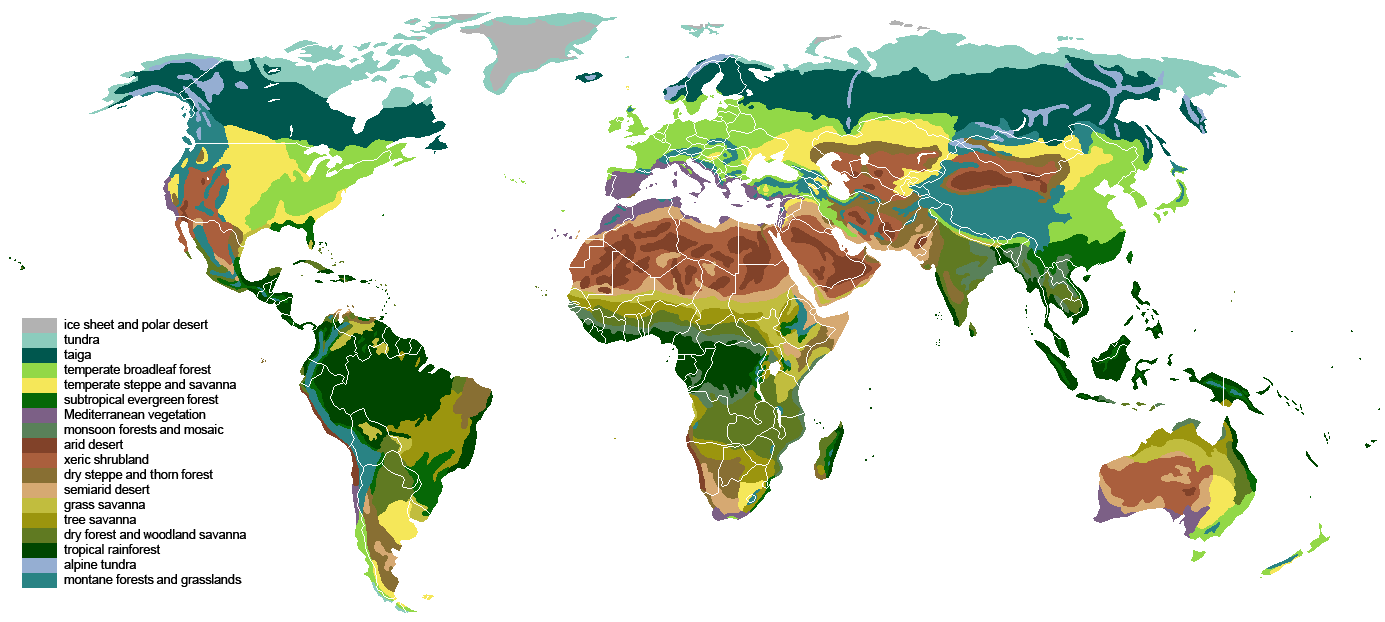
The globe hosts a variety of biomes, which are defined by their climate and ecological characteristics. Among others these include savannas, rainforests, tundras, and Mediterranean vegetation. Ecoregions are a more localized subset of biomes, and vary in definition by organizations like the US Environmental Protection Agency (EPA).
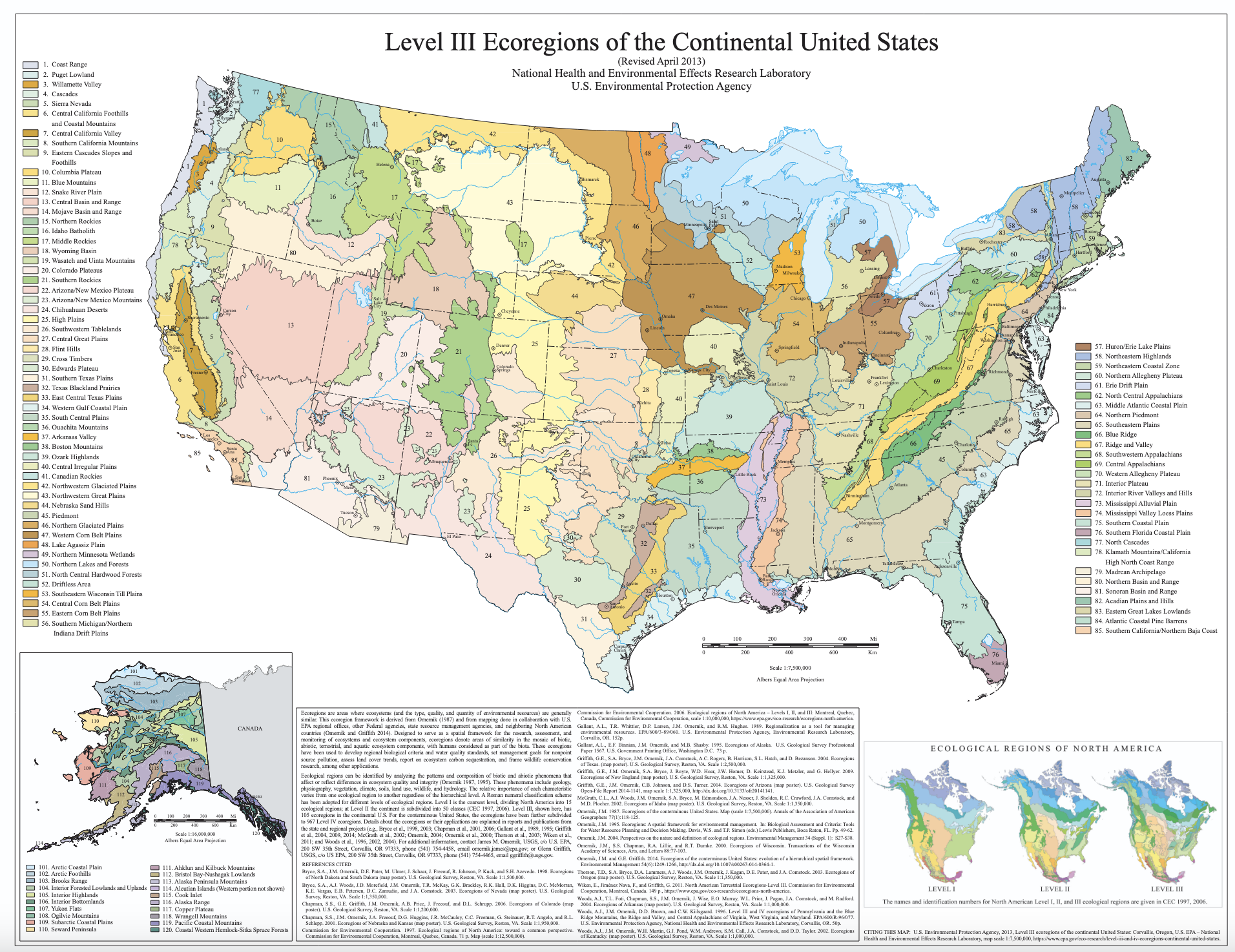
In central Jersey, we live in the temperate broadleaf forest biome, which stretches up through Canada, and more specifically we live in the Northern Piedmont ecoregion, which spans down all the way to Alabama. A New Jerseyan may reside in a suburban or urban development of this ecoregion, or perhaps on agricultural land.
Biomes and ecoregions vary by their availability of sun, amount of precipitation, elevation and slope of terrain, soil composition, dominant vegetation, and wildlife populations. All of these factors shape what living things will survive, compete, and interact with the biotic and abiotic environment around them. The plants that have evolved to live in a given region alongside other plants living in the same region are all considered a community. Much like human-made communities, when given the chance to interact with each other, these communities of plants multiply any one individual’s gifts.
In central Jersey (and much of north Jersey), we share the land with a mixed oak forest plant community. Here we find white, red, and black oaks dominating the forests interspersed with hickories, maples, birch, beech, and sassafras. When healthy and whole, the forest floors are covered in Virginia creeper, huckleberry, mayapple, white wood aster, and Jack-in-the-pulpit. What few old growth forests we have left are now fragmented, less biodiverse, polluted by urbanization and agriculture, and increasingly rare.
>> Native Plant Communities of New Jersey
>> Hutcheson Memorial Forest
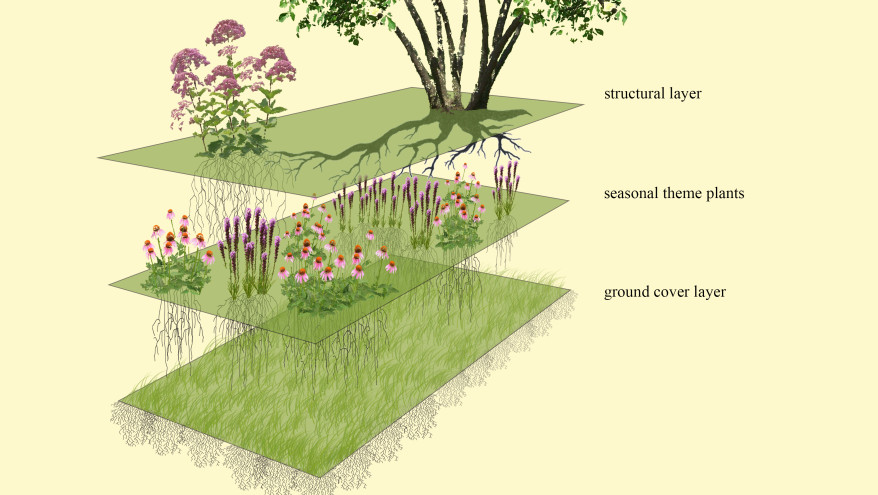
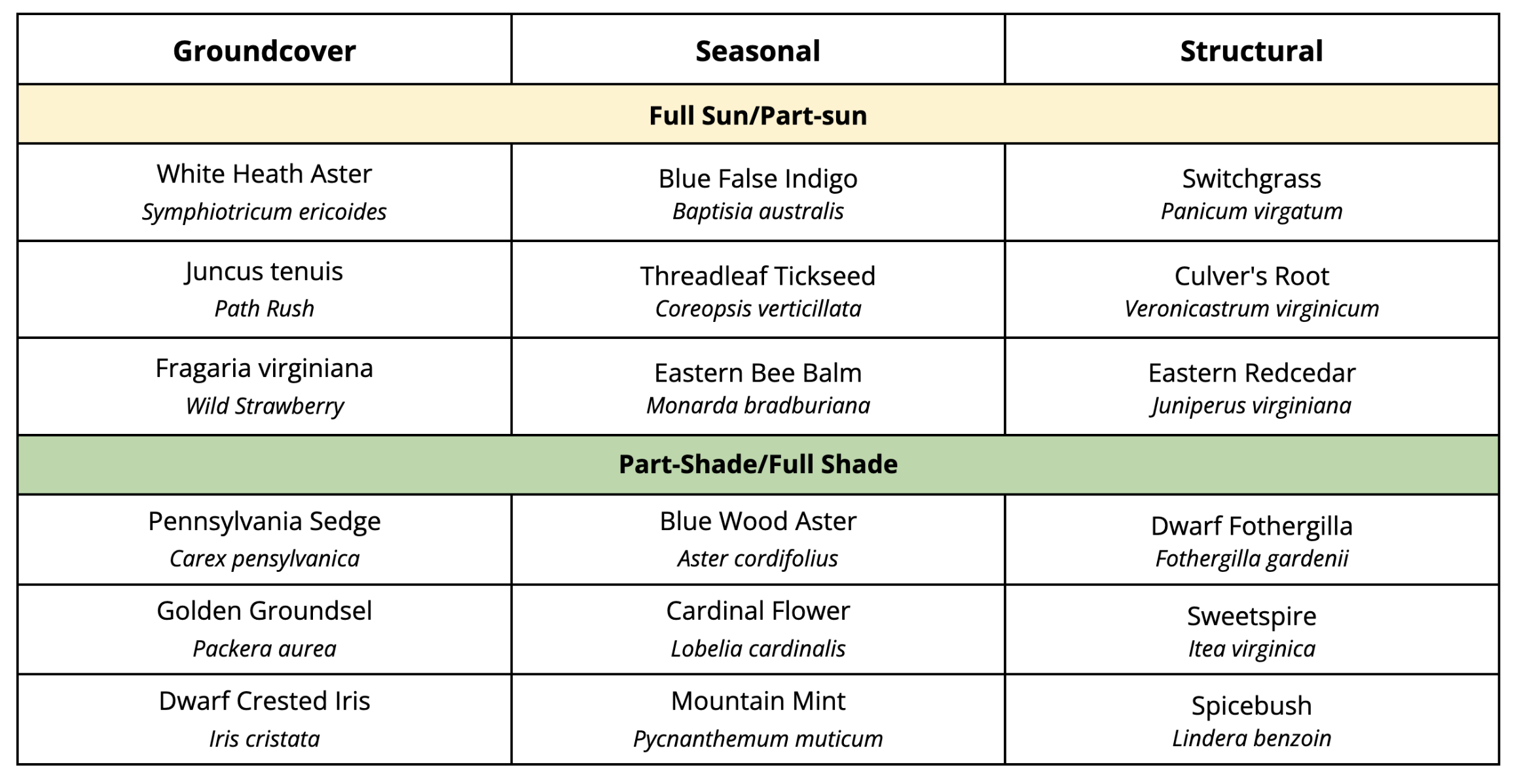
When designing with plant communities, it’s important to keep things layered and diverse. Taking a cue from Planting in a Post Wild World (Rainier & West), we create three functional layers with native and appropriate plants: the structural layer, the seasonal layer, and the ground layer. These mimic natural relationships between plants that fill every niche to gain access to light, water, pollinators, and nutrients. A good rule of thumb to achieve biodiversity is to plant no more than 10% of any species, 20% of any genus, and 30% of any family.
Here are some examples of solid native plants of
New Jersey, New York, and Pennsylvania to get you started!
Plant Density
Diversity of plants works best when paired with appropriate layered density, also known as biomass. For regions like a temperate deciduous forest, strategic overplanting can support a richer use of developed land. Dense plantings (especially those mimicking native plant communities) not only require less maintenance and irrigation over time, they are more likely to improve air and water quality, reduce storm-water runoff, and provide habitat for more insects, birds, and critters.
SITES™ credit C4.8 Optimize biomass supports these ecosystem services by maintaining or establishing regionally appropriate vegetative biomass. The SITES framework provides a table to help calculate a Biomass Density Index (BDI), the goal of which is to increase the score from the existing to the proposed site.
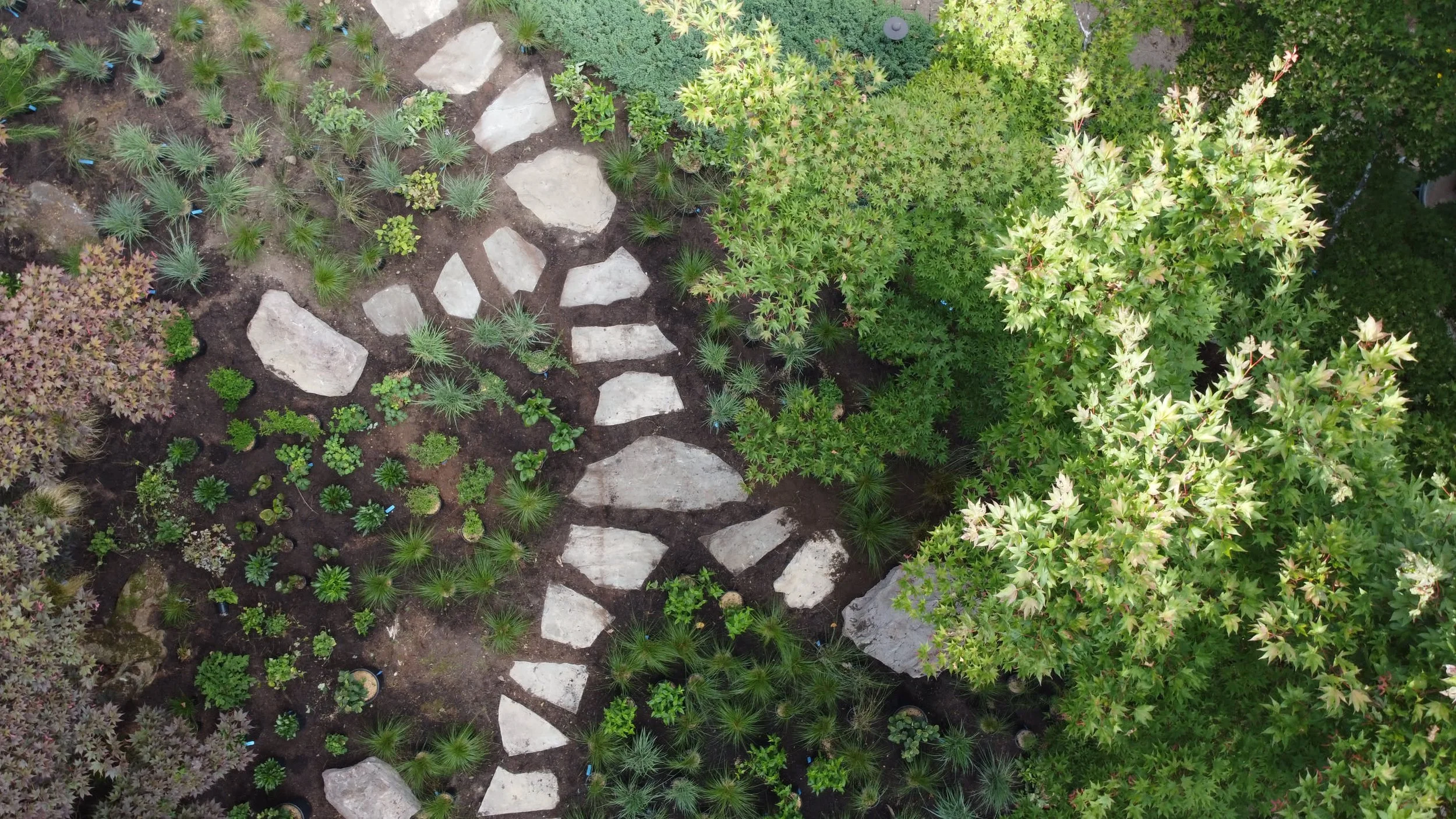
Planting dense, native, layered beds is one way to support biomass in the landscape. Planting native trees and shrubs is one of the highest impact things you can do to provide habitat for a wide range of wildlife. Removing a monoculture like lawn and replacing it with a variety of perennials is exactly how we start getting back to how natural systems are meant to operate.
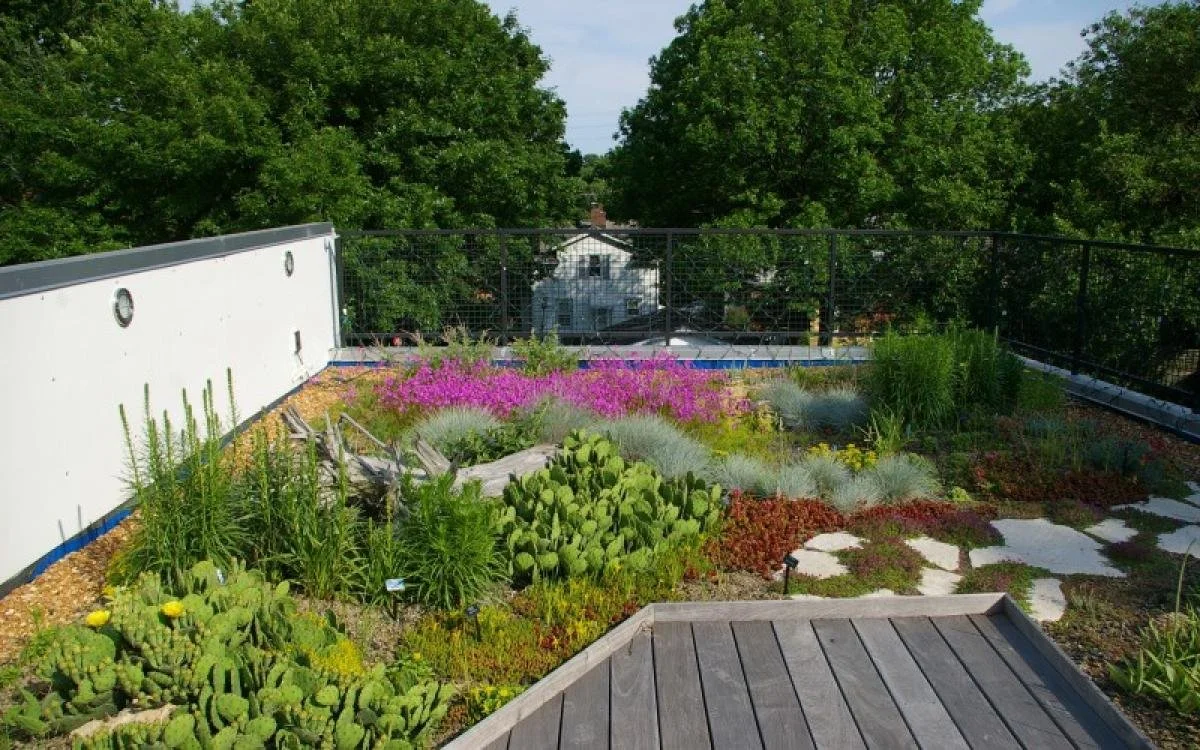
Green walls, green roofs, and trellises create opportunities to grow vegetation over built infrastructure. These can help lower heat island effects in urban areas, help shade in the hot summer, block cold winds in the winter, and are available for suburban and urban residents who may be limited in square footage. Not to mention these simple assemblies of materials make for beautiful soft edges on structures and ephemeral outdoor rooms.
Pictured: SWT Design Campus (SITES™ Accredited)
Getting Started
Listen to the land and it will tell you what will grow there.
Reduce monocultures like lawn and invasive plants.
Break through impervious surfaces to make room for life.
Support bounty in the landscape with dense, native, layered planting design.
If you’re stuck along the way, reach out and we’ll jump right in.
Opportunity is in every landscape.
From the ground up,
Design Ecosystems with us.
Check out other related essays from our Sustainable SITES Series
