SITES™ Overview
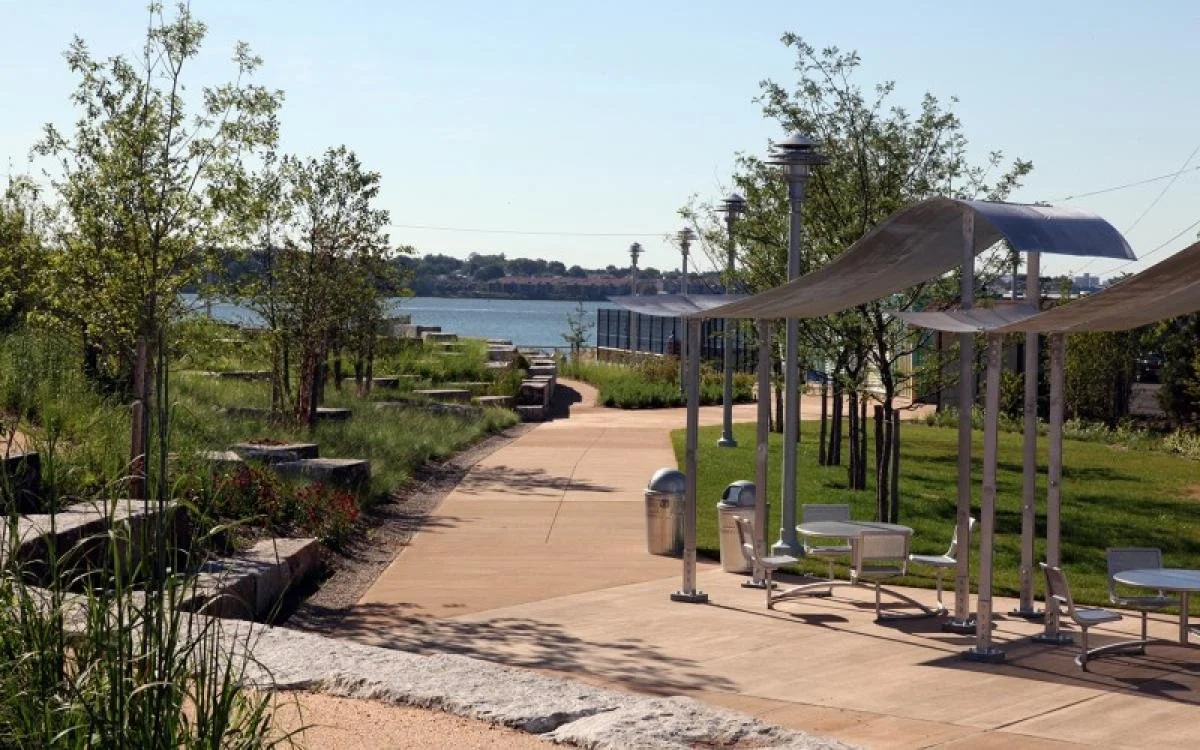
Hunts Point Landing (SITES™ Accredited Landscape)
About SITES
This series unpacks elements of the Sustainable Sites Initiative (SITES™), which grew out of the same framework as USGBC’s LEED green building certification. This rating system evaluates the performance of a landscape site (anything from the building ‘skin’ outward) and accredits those that fulfill requirements and achieve a certain number of points.
“By aligning land design and development practices with functions of healthy ecosystems, the SITES™ program demonstrates how the work of developers, property owners, landscape architects… can protect, restore, and enhance ecosystem services.” (SITES™ v2 Reference Guide)
“Ecosystem services are goods and services of direct or indirect benefit to humans that are produced by ecosystem processes that involve the interactions of living elements, such as vegetation and soil organisms, and non-living elements such as bedrock, water, and air.” (SITES™)
Introduction
The following articles explore some of the fundamentals of the Sustainable Sites Initiative. From understanding a site’s characteristics and elements to designing with the nature of water, vegetation, and materials, these resources provide guidance and insight into sustainable landscape design practices.
As you’ll explore in Site Assessment, it’s important to take a layered approach when both understanding and designing for any landscape. This means observing and measuring characteristics of how water moves, how plants grow, how materials impact our experience. By incorporating natural systems into our design logic, we create spaces and places that last generations and embody meaning.
You don’t need to pursue SITES™ accreditation in order to begin your journey in better understanding and designing for the land around you (although let us know if you’re interested!). It all begins with getting to know the place, and practicing thoughtful ecological design and construction.
Site Assessment
P2.2 Conduct pre-design site assessment
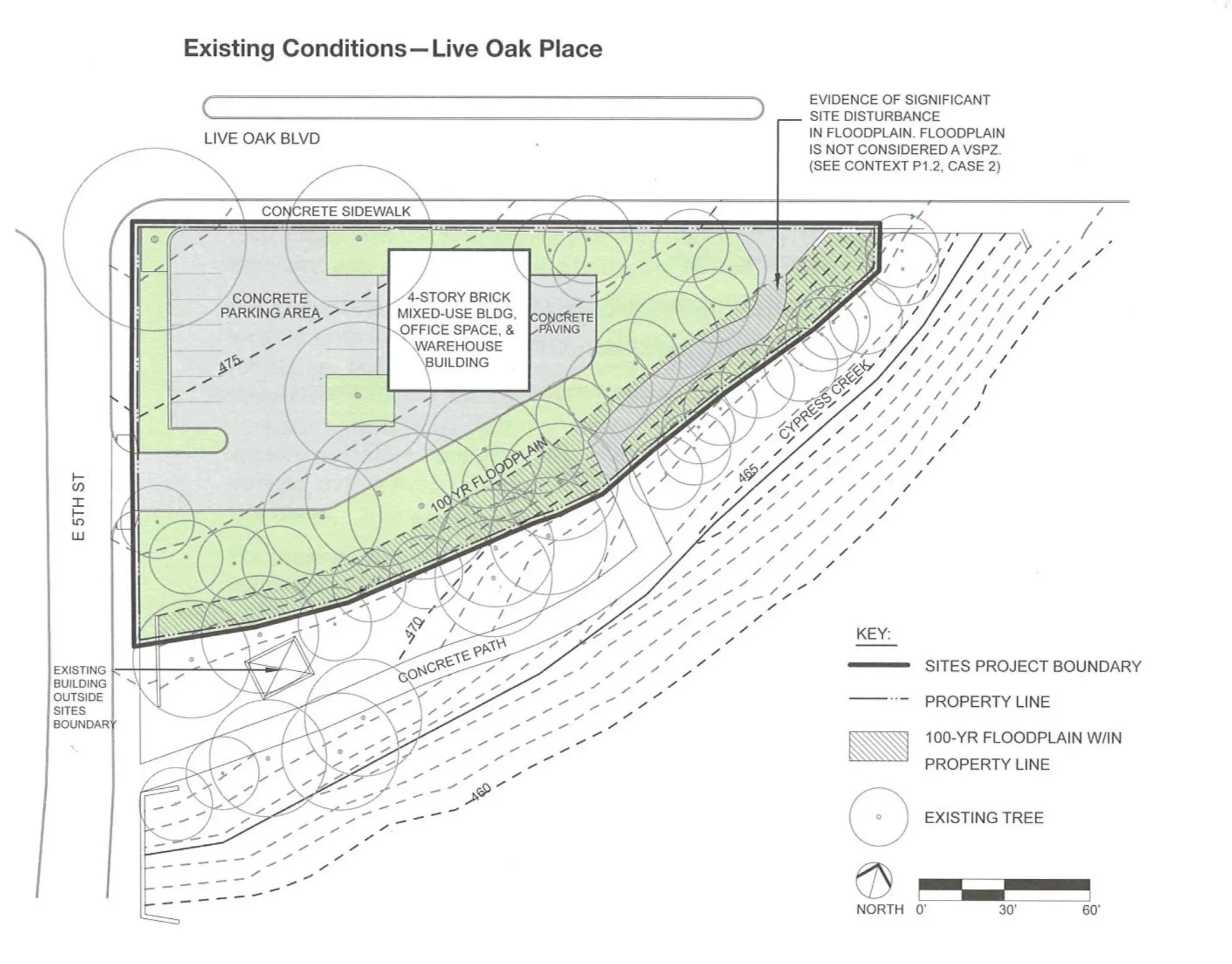
SITES™ Site Assessment Example
Every SITES™ accredited landscape must collect and assess information from the site to help identify opportunities for ecological improvement and connectivity. By combining this critical analysis with an integrative design team, this process results in a bespoke and beautiful solution while cutting down on overall project friction.
Each project must map existing site conditions and resources, collect information about surrounding areas (including non-physical influences like policy), and explain how this information will influence the sustainable design.
This article features landscape architect Ian McHarg, and his foundational book for the environmental movement: Design With Nature. It includes plenty of tips and useful resources for performing your own site assessment.
>> Explore More
The Water Cycle
P3.1 Manage precipitation on site
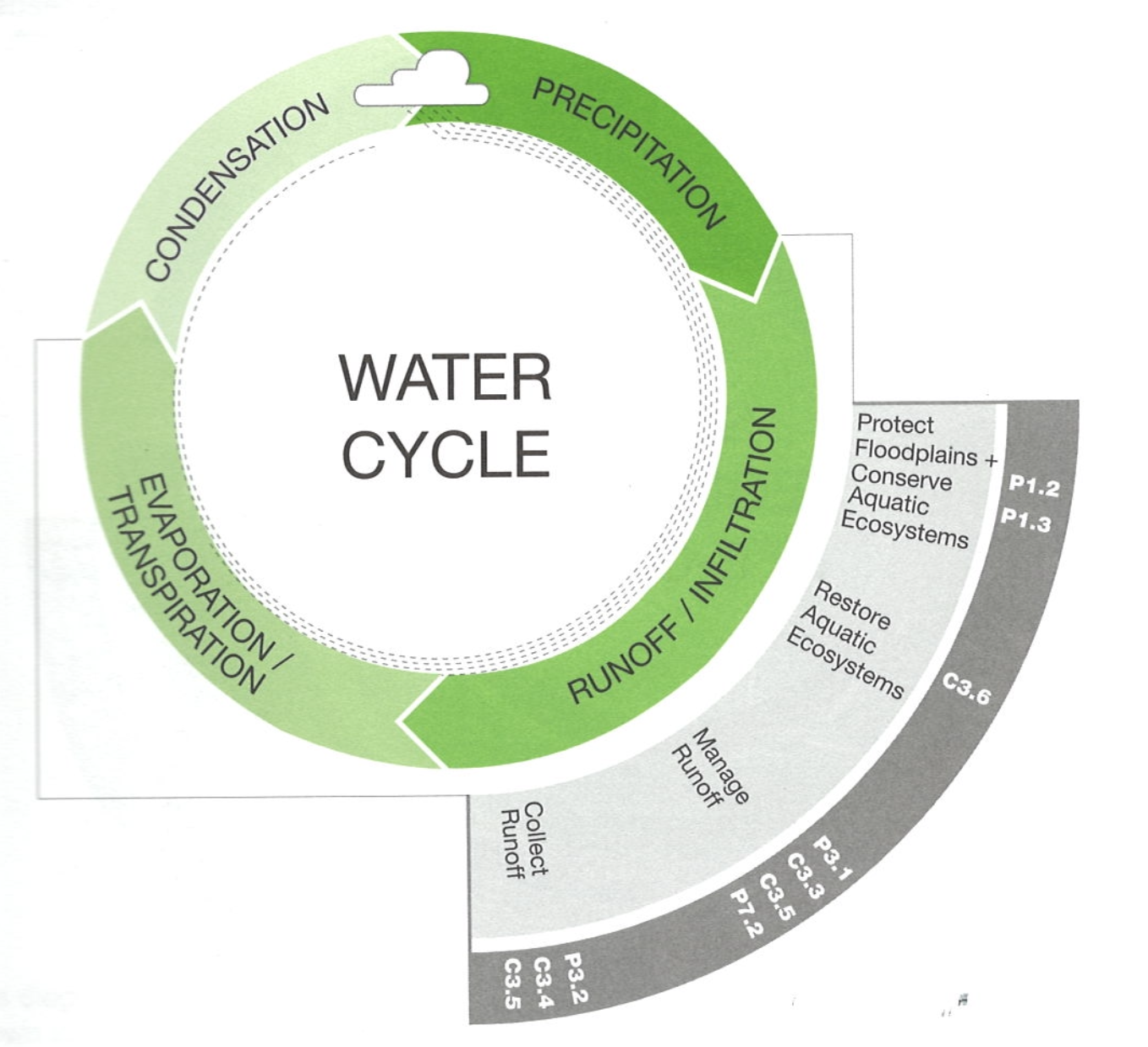
SITES™ Water Cycle
Every SITES™ accredited landscape must retain a certain amount of water directly through the natural and built systems within the site’s boundaries. Let’s break down the criteria, calculations, and steps of “replicating natural hydrological conditions.”
This article focuses on the water cycle and the ways in which sustainable design can lend a hand in conserving water and managing runoff, while protecting floodplains and aquatic ecosystems.
Dive into the technical aspects of retaining the precipitation volume of the 60th percentile precipitation event through on-site infiltration, evapotranspiration, and reuse, while providing a maintenance plan that ensures long-term effectiveness of stormwater features.
The Vegetation Life-Cycle
P4.3 Use appropriate plants and related credits
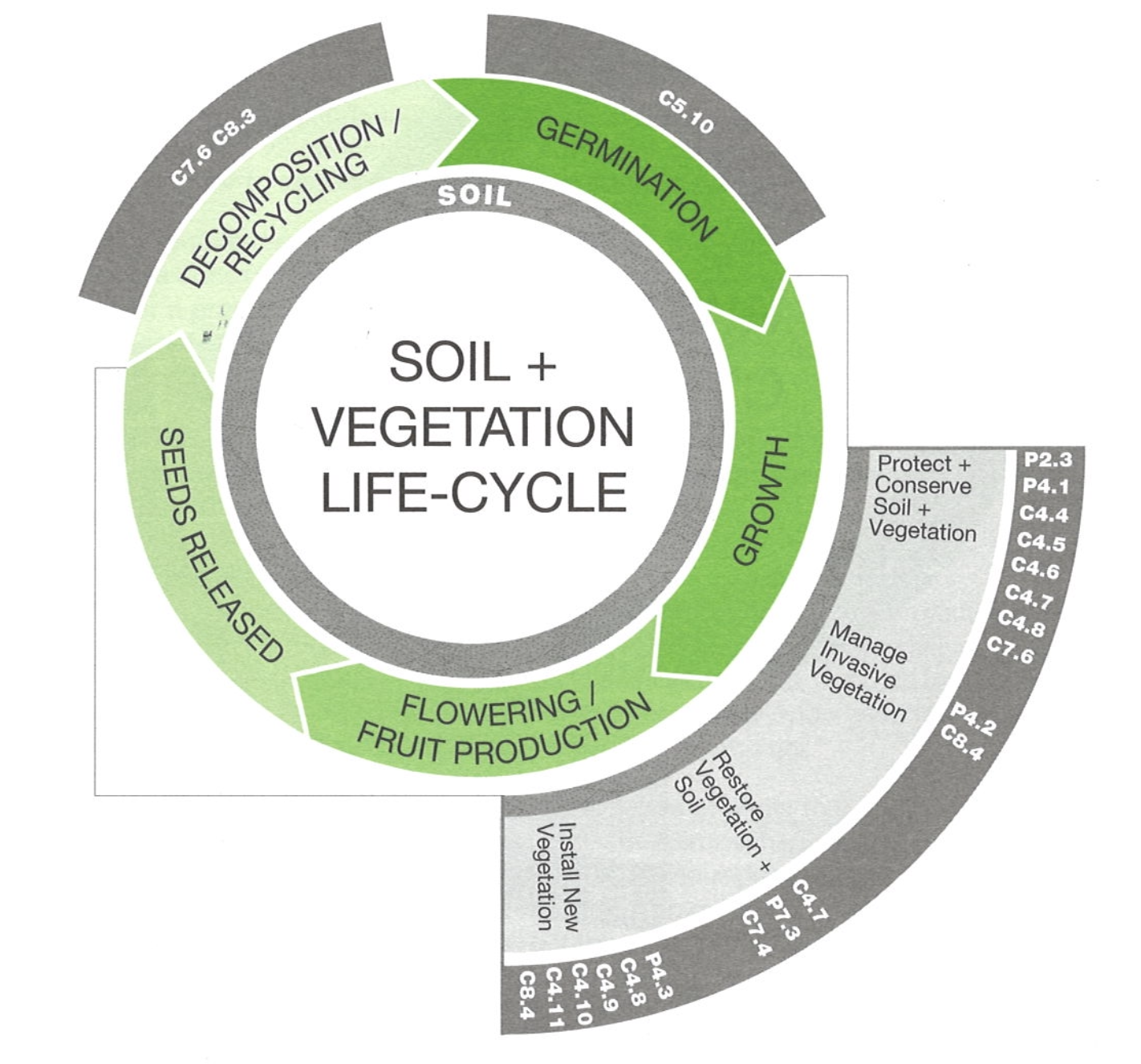
SITES™ Soil + Vegetation Life-Cycle
Every SITES™ accredited landscape must use plants appropriate to a site’s conditions, climate, and design intent. Credits are given to projects that incorporate native plants, native plant communities, and optimize biomass. Let’s unpack how to design with the nature of plants and the conditions of the land to make thriving, functional, and lush outdoor spaces.
This article focuses on the vegetation life-cycle and the ways in which sustainable design can leverage the functionality of native and appropriate plants, which reduce irrigation and maintenance needs, increase habitat, and promote regional identity.
Learn how to improve landscape performance and reduce resource use by installing only plants that are appropriate for site conditions, climate, and design intent. It features resources about identifying your ecoregion, and lists native plants for New Jersey, New York, and Pennsylvania landscapes.
Materials Life-Cycle
Section 5: Site Design – Materials Selection
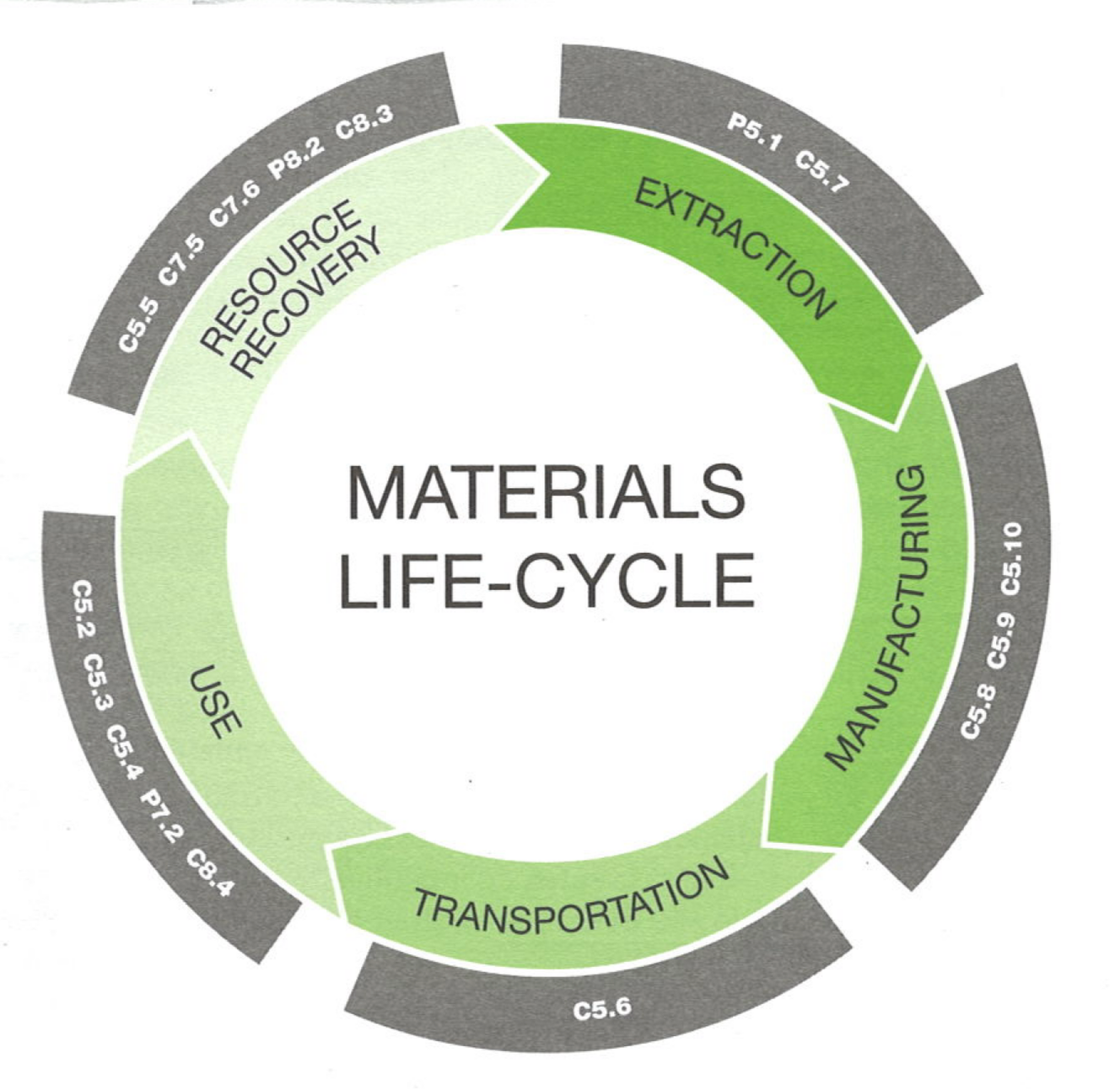
SITES™ Materials Life-Cycle
Every SITESTM accredited landscape must appropriately select and use materials in ways that contribute to a project’s ability to support and enhance ecosystem services (at any point in the material’s life-cycle). Let’s explore the many ways in which demolition, selection, procurement, and use of materials can support the decrease of landfill use, preservation of natural resources, reduce emissions, and support sustainable building products.
Wood, stone, vegetation, earth, metal, brick, concrete, asphalt, glass, textiles, plastic… We position these elements and install them within a site to create spaces, surfaces, seating, shade, screening, walls, water, containers, railings, visual interest, lighting, and art. And each of these has nearly endless options for color, material, finish, size, hardware, assembly, and source.
This article features landscape architect and Sustainable Sites Initiative founder, Meg Calkins, who literally wrote the book on sustainable materials.
Getting Started
The land has endless stories to share, we just need to listen for them.
Begin your relationship with water by noticing it.
Support bounty in the landscape with dense, native, layered planting design.
Design to close the loop, and express the materials’ story out loud.
If you’re stuck along the way, reach out and we’ll jump right in.
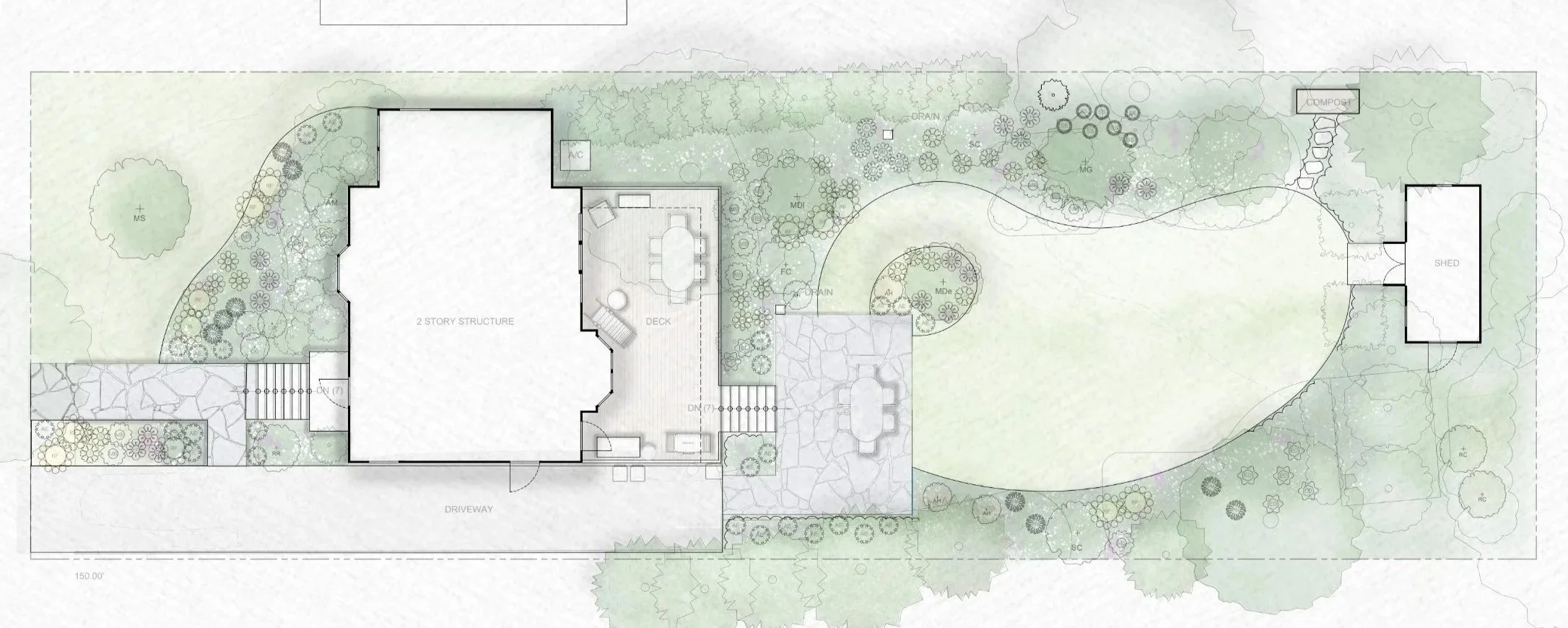
Opportunity is in every landscape.
From the ground up,
Design Ecosystems with us.
Check out other related essays from our Sustainable SITES Series
